Cubic Yard Calculator for Soil
Use this Soil Calculator to quickly calculate soil volume in cubic yards, cubic feet, and cubic meters. Estimate topsoil, fill dirt, or garden soil requirements for landscaping, lawn projects, raised beds, and other outdoor applications.
Soil Results
How to Use the Soil Calculator
The Soil Calculator helps estimate the amount of topsoil, fill dirt, garden soil, or screened soil needed for landscaping and gardening projects. Enter your area dimensions and soil depth to instantly calculate soil volume in cubic yards, cubic feet, and cubic meters.
Example Calculation
Suppose you want to fill a garden area with topsoil using the following measurements:
- Length: 20 feet
- Width: 10 feet
- Depth: 4 inches
First, convert the soil depth from inches to feet:
Next, calculate the total volume in cubic feet:
Convert cubic feet to cubic yards:
You would need approximately 2.44 cubic yards of soil to cover the area with a 4-inch layer of topsoil.
How to Calculate Soil Requirements
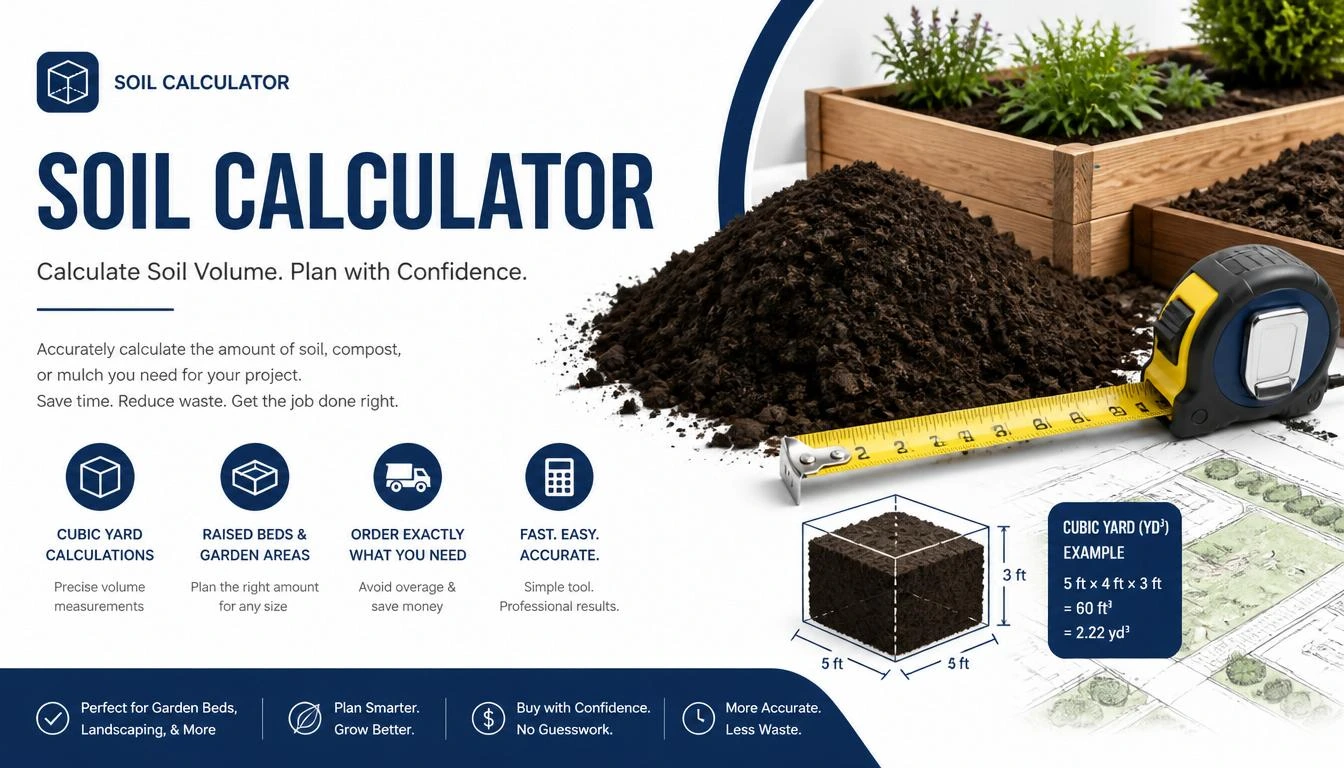
Follow these simple steps to determine how much soil your project requires:
- Step 1: Select the shape of the area you want to fill.
- Step 2: Enter the length and width (or diameter).
- Step 3: Enter the desired soil depth.
- Step 4: Choose the soil type.
- Step 5: Click the Calculate Soil button.
The calculator automatically determines the total soil volume and converts it into cubic yards for easy ordering.
To convert cubic feet into cubic yards:
This calculation helps reduce material waste and ensures you order the correct amount of soil for your landscaping or gardening project.
Recommended Soil Depth
The ideal soil depth varies depending on the type of project. Use these common recommendations as a starting point when planning your soil requirements.
Soil Types and Their Uses
Different soil types are used for different landscaping, gardening, and construction projects. Understanding the purpose of each soil type can help you choose the right material and accurately estimate the amount of soil needed for your project.
Topsoil
Topsoil is the uppermost layer of soil and is commonly used for lawns, flower beds, planting areas, and landscape improvements. It contains nutrients that support healthy plant growth.
Fill Dirt
Fill dirt is primarily used for grading, leveling land, filling holes, and preparing construction sites. It contains very little organic material and provides a stable base.
Garden Soil
Garden soil is specially blended for growing vegetables, flowers, and shrubs. It contains organic matter that improves drainage, moisture retention, and plant health.
Screened Soil
Screened soil is processed to remove rocks, roots, and debris. It creates a smooth surface and is commonly used for landscaping, seeding, and lawn preparation.
Compost Blend
Compost-blended soil contains organic materials that enrich soil fertility and improve growing conditions. It is ideal for gardens, raised beds, and planting projects.
Raised Bed Mix
Raised bed soil mixes are designed to provide excellent drainage and nutrient availability. They are commonly used in vegetable gardens and elevated planting beds.
Soil Weight Chart
Soil weight can vary depending on moisture content, soil composition, and compaction. The following chart provides approximate weights per cubic yard for common soil types to help estimate transportation requirements and project costs.
| Soil Type | Approx. Weight per Cubic Yard | Common Uses |
|---|---|---|
| Topsoil | 1.1 Tons | Lawns, gardens, landscaping |
| Fill Dirt | 1.3 Tons | Grading, leveling, construction |
| Garden Soil | 1.0 Ton | Vegetable gardens and flower beds |
| Screened Soil | 1.15 Tons | Seeding and lawn preparation |
| Compost Blend | 0.8 Tons | Soil improvement and planting |
Why Soil Weight Matters
Knowing the estimated weight of soil helps determine delivery requirements, truck capacity, transportation costs, and whether the soil can be safely moved or stored on-site. Wet soil can weigh significantly more than dry soil, so actual weights may vary. If you’re unsure how to estimate the amount of soil required before calculating its weight, read our Soil Volume Guide to learn how to calculate soil volume accurately.
Frequently Asked Questions
Find answers to common questions about cubic yards, material volume calculations, and construction measurements.
How do I calculate how much soil I need?
Multiply the length, width, and depth of the area to find the volume in cubic feet. Then divide the result by 27 to convert cubic feet into cubic yards.
How many cubic yards of soil do I need?
The amount of soil required depends on the dimensions and depth of your project area. Use a soil calculator to quickly determine the exact volume in cubic yards.
How much does a cubic yard of soil weigh?
A cubic yard of soil typically weighs between 0.8 and 1.3 tons, depending on the soil type, moisture content, and level of compaction.
What is the difference between topsoil and fill dirt?
Topsoil contains organic matter and nutrients that support plant growth, while fill dirt is mainly used for grading, leveling, and construction projects.
How deep should topsoil be for a lawn?
Most lawn projects require 4 to 6 inches of topsoil to promote healthy root development and improve overall turf growth.
How much soil do I need for a raised garden bed?
Raised garden beds typically require 8 to 12 inches of soil depth, although deeper beds may be beneficial for vegetables with extensive root systems.
How do I convert cubic feet to cubic yards?
Divide the total cubic feet by 27. Since one cubic yard equals 27 cubic feet, this conversion provides the required volume in cubic yards.
Can I use this soil calculator for landscaping projects?
Yes, the calculator can be used for landscaping, lawn leveling, flower beds, raised beds, garden projects, and general soil estimation.
What soil type is best for gardening?
Garden soil or compost-enriched topsoil is generally the best choice for growing vegetables, flowers, and ornamental plants.
hould I order extra soil?
Yes, it is usually recommended to order 5–10% extra soil to account for settling, compaction, uneven surfaces, and minor measurement errors.