Gravel Weight Guide
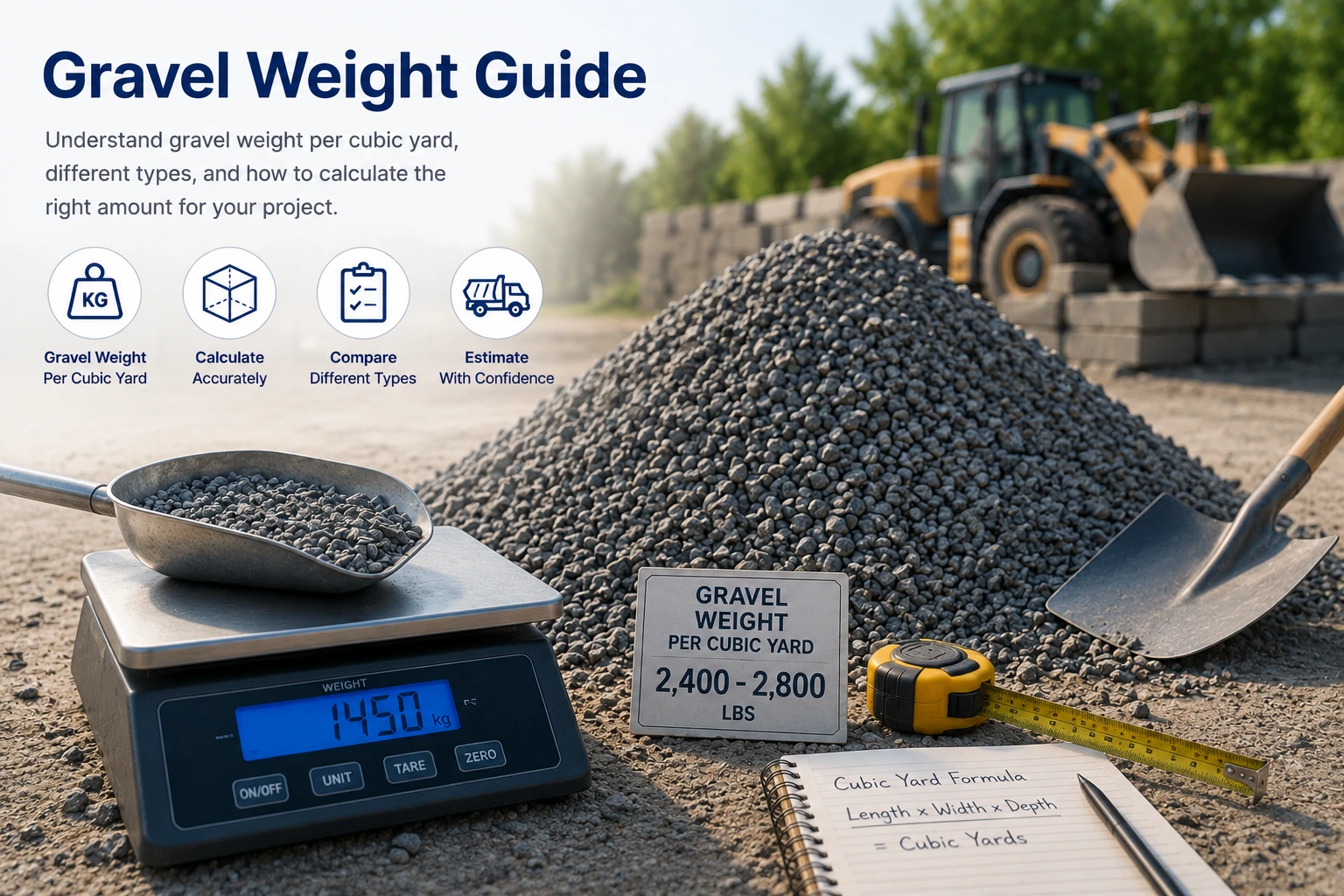
Understanding gravel weight is essential for estimating material quantities, delivery requirements, transportation costs, and project budgets. Different gravel types have different densities, which means the weight of one cubic yard can vary significantly. This guide provides average gravel weights, calculation methods, and practical examples to help you estimate gravel weight more accurately.
Average Gravel Weight by Type
The table below shows approximate weights for common gravel materials. Actual weights may vary depending on moisture content, stone size, and compaction.
| Gravel Type | Approx. Weight per Cubic Yard |
|---|---|
| Pea Gravel | 1.30 Tons |
| Crushed Stone | 1.40 Tons |
| River Rock | 1.35 Tons |
| Limestone Gravel | 1.35 Tons |
| Jersey Shore Gravel | 1.25 Tons |
| Granite Gravel | 1.40 Tons |
Why Gravel Weight Matters
Knowing the weight of gravel is important when ordering materials, scheduling deliveries, and planning transportation. Suppliers often sell gravel by the ton, while calculators estimate volume in cubic yards. Understanding the relationship between volume and weight helps ensure accurate ordering and prevents costly shortages or excess material.
Delivery Planning
Estimate truck requirements and delivery capacity.
Project Budgeting
Calculate costs more accurately using weight estimates.
Material Ordering
Avoid over-ordering or under-ordering gravel.
Transportation
Understand hauling limits and load capacities.
How to Calculate Gravel Weight
Gravel weight can be estimated by multiplying the gravel volume by its density. Since different gravel materials have different densities, the final weight may vary slightly between products.
In most landscaping projects, volume is measured in cubic yards and density is measured in tons per cubic yard.
Example Calculation
Suppose a project requires 5 cubic yards of crushed stone.
- Volume: 5 cubic yards
- Density: 1.40 tons per cubic yard
The estimated weight of the gravel would be approximately 7 tons.
Gravel Weight Estimation Chart
The chart below uses an average gravel density of 1.40 tons per cubic yard. Actual weights may vary slightly depending on the gravel type and moisture content.
| Cubic Yards | Approximate Weight |
|---|---|
| 1 | 1.4 Tons |
| 2 | 2.8 Tons |
| 3 | 4.2 Tons |
| 5 | 7.0 Tons |
| 10 | 14.0 Tons |
| 15 | 21.0 Tons |
Factors That Affect Gravel Weight
Gravel weight is not always the same. Several factors can influence the final weight of a cubic yard of gravel.
Gravel Type
Different materials such as limestone, granite, and river rock have different densities.
Moisture Content
Wet gravel weighs more than dry gravel because of the water trapped between the stones.
Stone Size
Larger stones create more air space, which can slightly reduce overall density.
Compaction
Compacted gravel becomes denser and heavier than loose gravel.
Typical Dump Truck Capacity
Knowing truck capacity can help estimate how many deliveries may be needed for your project.
| Truck Type | Typical Capacity |
|---|---|
| Small Dump Truck | 5–7 Cubic Yards |
| Medium Dump Truck | 10–12 Cubic Yards |
| Large Dump Truck | 14–16 Cubic Yards |
Need a More Accurate Estimate?
While gravel weight charts provide useful estimates, the most accurate way to determine material requirements is by calculating the exact volume of your project area. Our Gravel Calculator helps estimate cubic yards, weight, and material quantities instantly.
Use Gravel CalculatorFrequently Asked Questions
Why does gravel weight vary by type?
Different gravel materials have different densities. Granite, limestone, river rock, and crushed stone can all weigh different amounts per cubic yard.
Does wet gravel weigh more than dry gravel?
Yes. Water adds extra weight, so wet gravel can weigh noticeably more than dry gravel.
How much does 5 cubic yards of gravel weigh?
Using an average density of 1.4 tons per cubic yard, 5 cubic yards of gravel weighs approximately 7 tons.
How much does 10 cubic yards of gravel weigh?
Ten cubic yards of gravel typically weighs around 14 tons, depending on the gravel type.
What is the heaviest type of gravel?
Dense crushed stone and granite gravel are generally among the heaviest gravel materials used in landscaping and construction.
What is the lightest type of gravel?
Decorative river rock and certain lightweight landscaping gravels usually weigh less than dense crushed stone products.
How much gravel can a dump truck carry?
Most dump trucks can carry between 10 and 16 cubic yards of gravel, depending on truck size and local weight regulations.
Can gravel weight affect delivery costs?
Yes. Delivery charges often depend on both the weight and quantity of gravel being transported.
Why is gravel sold by both tons and cubic yards?
Some suppliers price gravel by weight while others sell by volume. Understanding both measurements helps compare prices accurately.
How accurate are gravel weight estimates?
Gravel weight estimates are approximate because density varies based on material type, moisture content, and compaction.