Concrete Thickness Guide
Choosing the correct concrete thickness is essential for strength, durability, and long-term performance. The required thickness depends on the type of project, expected load, soil conditions, and local building requirements. This guide explains recommended concrete slab thicknesses for patios, driveways, sidewalks, garages, foundations, and other common residential projects.
Why Concrete Thickness Matters
Concrete thickness directly affects a slab’s ability to support weight and resist cracking. A slab that is too thin may fail prematurely, while an unnecessarily thick slab can increase project costs. Selecting the proper thickness helps balance strength, durability, and budget.
Improves Strength
Thicker concrete can handle heavier loads and traffic.
Reduces Cracking
Proper slab thickness helps minimize structural stress.
Increases Lifespan
Correct thickness improves long-term durability.
Controls Costs
Avoid paying for unnecessary concrete volume.
Recommended Concrete Thickness Chart
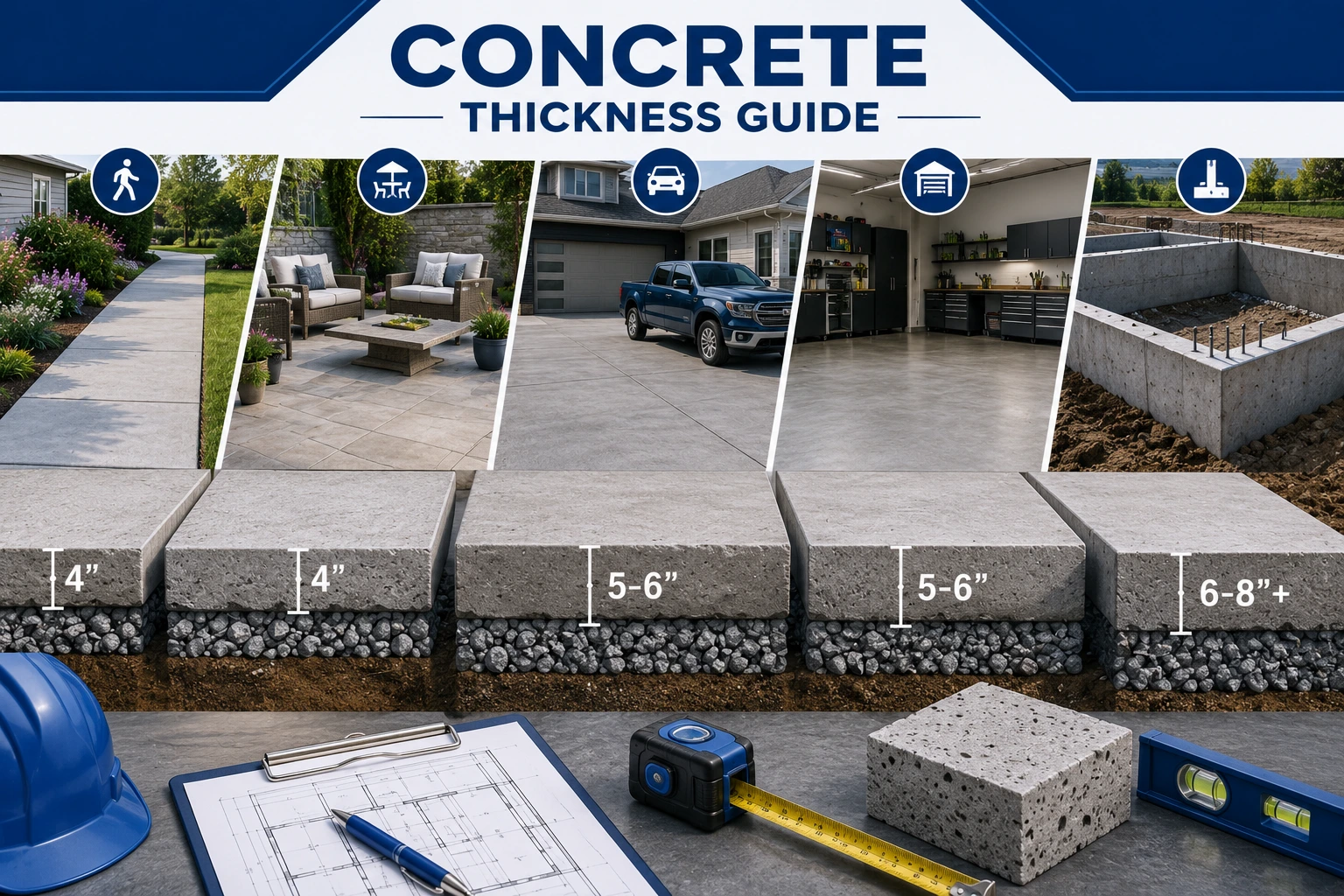
The following chart shows typical concrete thickness recommendations for common residential and landscaping projects.
| Project Type | Recommended Thickness |
|---|---|
| Sidewalk | 4 Inches |
| Patio | 4 Inches |
| Garden Shed Base | 4 Inches |
| Residential Driveway | 5–6 Inches |
| Garage Floor | 5–6 Inches |
| Hot Tub Pad | 6 Inches |
| RV Parking Pad | 6–8 Inches |
| Workshop Floor | 6 Inches |
Concrete Thickness by Project Type
Different projects place different demands on concrete. Understanding these requirements can help prevent future repairs and structural problems.
Patios
Most patios require a 4-inch slab, which is sufficient for outdoor furniture and regular foot traffic.
Sidewalks
Sidewalks generally use 4 inches of concrete and perform well under normal pedestrian use.
Driveways
Residential driveways commonly use 5 to 6 inches of concrete to support vehicle loads.
Garage Floors
Garage slabs typically require at least 5 inches of concrete to support parked vehicles and equipment.
Example Thickness Recommendations
The examples below show common thickness recommendations for residential projects.
Example 1: Backyard Patio
- Project: Patio
- Traffic: Foot Traffic Only
- Recommended Thickness: 4 Inches
Example 2: Residential Driveway
- Project: Driveway
- Traffic: Cars and Light Trucks
- Recommended Thickness: 5–6 Inches
Example 3: RV Parking Area
- Project: RV Pad
- Traffic: Heavy Vehicles
- Recommended Thickness: 6–8 Inches
Factors That Affect Concrete Thickness
Recommended slab thickness can vary depending on the conditions of the project. Before pouring concrete, consider the following factors.
Load Requirements
Areas supporting vehicles, equipment, or heavy loads generally require thicker concrete slabs.
Soil Conditions
Weak or poorly compacted soil may require additional slab thickness and reinforcement.
Climate
Freeze-thaw cycles can increase stress on concrete and may require stronger slab designs.
Reinforcement
Rebar and wire mesh improve strength but do not always replace the need for adequate thickness.
Residential vs Commercial Concrete Thickness
Residential projects generally use thinner slabs than commercial and industrial applications. The table below shows common thickness ranges.
| Application | Typical Thickness |
|---|---|
| Residential Patio | 4 Inches |
| Residential Driveway | 5–6 Inches |
| Garage Floor | 5–6 Inches |
| Commercial Parking Area | 6–8 Inches |
| Industrial Floor | 8–12 Inches |
Common Concrete Thickness Mistakes
Avoiding these common mistakes can help improve the performance and lifespan of your concrete slab.
Pouring Too Thin
Thin slabs are more likely to crack, settle, and fail under load.
Ignoring Soil Preparation
Poor subgrade preparation can cause movement and cracking regardless of slab thickness.
Skipping Reinforcement
Reinforcement helps control cracking and improves durability.
Using the Same Thickness Everywhere
Different projects have different load requirements and should be designed accordingly.
Need to Estimate Concrete Volume?
Once you know the correct slab thickness, the next step is calculating how much concrete your project requires. Use our Concrete Calculator to estimate volume in cubic yards, cubic feet, and cubic meters.
Use Concrete CalculatorFrequently Asked Questions
Is 4 inches of concrete thick enough for a patio?
Yes. A 4-inch concrete slab is typically sufficient for patios, walkways, and other areas with normal foot traffic.
How thick should a residential driveway be?
Most residential driveways require 5 to 6 inches of concrete to support cars and light trucks.
How thick should concrete be for heavy vehicles?
Areas used by RVs, trailers, or heavy equipment commonly require 6 to 8 inches of concrete or more.
Does thicker concrete last longer?
In many cases, yes. Proper thickness improves load-bearing capacity and helps reduce cracking and structural stress.
Can reinforcement replace slab thickness?
No. Reinforcement improves strength but should not be used as a substitute for adequate slab thickness.
What is the minimum thickness for a concrete slab?
Most residential slabs use a minimum thickness of 4 inches, although local requirements may vary.
How thick should a garage floor be?
Garage floors typically use 5 to 6 inches of concrete to support vehicle loads and equipment.
Does soil condition affect slab thickness?
Yes. Weak or unstable soil may require thicker concrete and additional reinforcement.