Cubic Yard Calculator for Gravel
Use this gravel calculator to estimate how much gravel you need for driveways, pathways, drainage, and landscaping projects.
Gravel Results
How to Calculate Gravel Volume
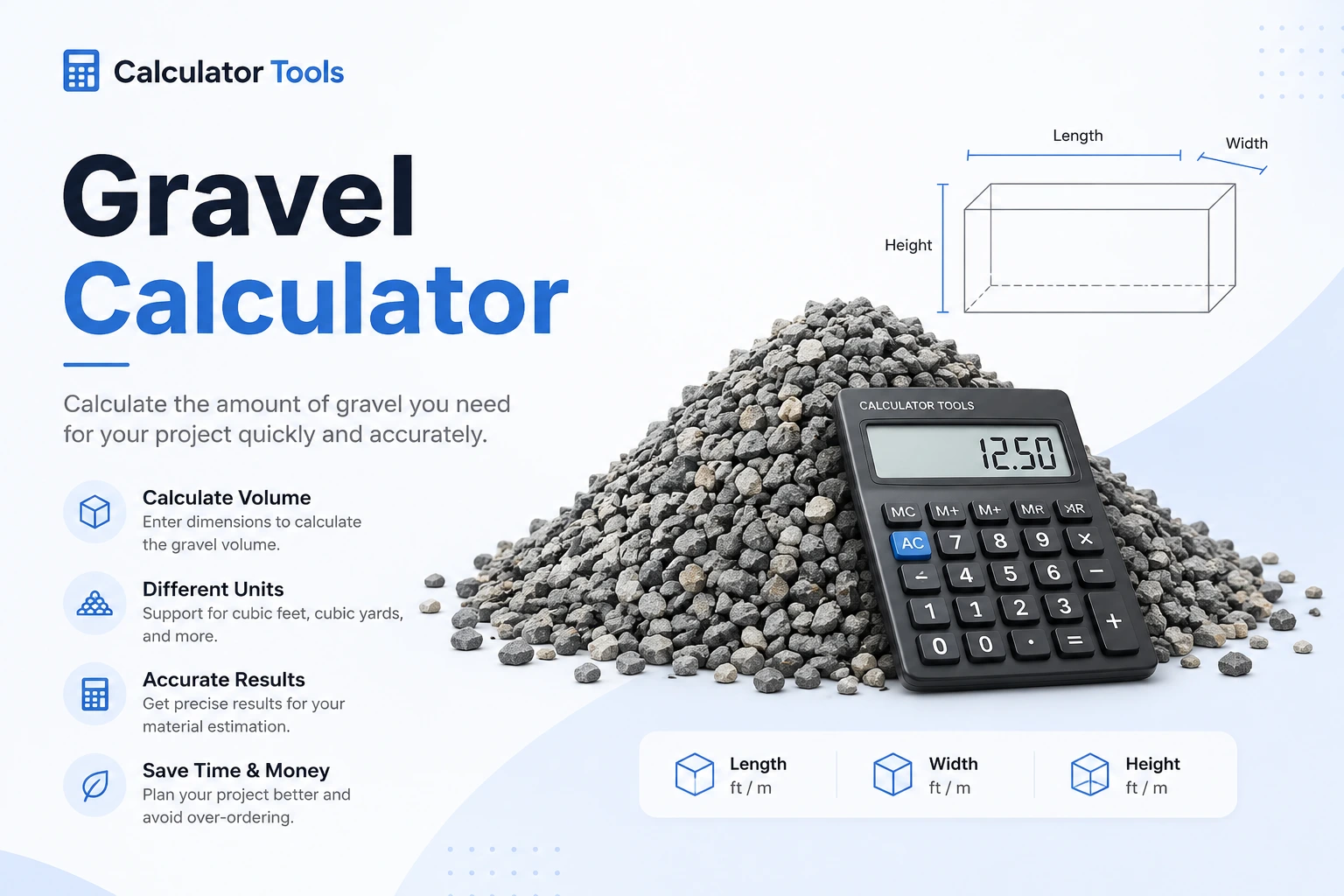
Calculating gravel volume helps estimate how much gravel you need for driveways, walkways, drainage systems, landscaping, and construction projects. To calculate gravel in cubic yards, multiply the length, width, and depth of the area, then divide the result by 27.
Gravel Calculation Example
Suppose your gravel project area measures:
- Length: 12 feet
- Width: 8 feet
- Depth: 4 inches
First convert depth into feet:
Now calculate cubic feet:
Then convert cubic feet into cubic yards:
You would need approximately 1.17 cubic yards of gravel for this project.
Gravel Weight and Coverage Chart
Different types of gravel have different weights and coverage areas per cubic yard. Use the chart below to estimate gravel weight, coverage, and material requirements for your landscaping or construction project.
| Gravel Type | Average Weight Per Cubic Yard | Estimated Coverage | Common Uses |
|---|---|---|---|
| Pea Gravel | 2,800 lbs | 100 sq ft at 3 inches | Walkways, patios, landscaping |
| Crushed Stone | 3,000 lbs | 90 sq ft at 3 inches | Driveways, foundations, drainage |
| River Rock | 2,600 lbs | 110 sq ft at 3 inches | Decorative landscaping, gardens |
| Dense Gravel | 3,200 lbs | 85 sq ft at 3 inches | Heavy-duty construction projects |
| Quarry Process | 2,900 lbs | 95 sq ft at 3 inches | Road base, paving foundations |
Important Gravel Coverage Note
Gravel coverage depends on material size, compaction, and installation depth. Deeper gravel layers require more material per square foot. Always order slightly more gravel than your estimated calculation to account for settling and waste. If you also need to estimate the total weight of your material for ordering or transportation, see our Gravel Weight Guide.
Common Types of Gravel
Different gravel types are used for landscaping, drainage, driveways, patios, and construction projects. Choosing the right gravel improves durability, drainage, and overall appearance.
Pea Gravel
Pea gravel consists of small, smooth, rounded stones commonly used for patios, pathways, playgrounds, and decorative landscaping projects.
Best For: Landscaping & WalkwaysCrushed Stone
Crushed stone is a durable gravel material ideal for driveways, foundations, drainage systems, and heavy-duty construction applications.
Best For: Driveways & DrainageRiver Rock
River rock features smooth natural stones often used in decorative gardens, water features, edging, and modern landscaping designs.
Best For: Decorative LandscapingDense Grade Gravel
Dense grade gravel contains stone dust and compact materials that create a strong and stable base for roads and paving projects.
Best For: Base Layers & ConstructionGravel Calculator FAQs
Find answers to common questions about gravel calculations, gravel coverage, weight estimation, and landscaping material measurements.
How much gravel does 1 cubic yard cover?
One cubic yard of gravel typically covers around 100 square feet at a depth of 3 inches. Coverage may vary depending on gravel size and installation depth.
How do I calculate how much gravel I need?
Measure the length, width, and depth of your project area. Multiply those dimensions together to get cubic feet, then divide by 27 to convert the result into cubic yards.
How many tons are in a cubic yard of gravel?
One cubic yard of gravel usually weighs between 1.3 and 1.5 tons depending on the gravel type, moisture level, and material density.
What depth should gravel be installed?
Gravel is commonly installed at a depth of 2 to 4 inches for pathways and landscaping projects, while driveways may require 4 to 6 inches for better durability.
How much does a cubic yard of gravel weigh?
A cubic yard of gravel generally weighs between 2,600 and 3,000 pounds depending on the gravel material and compaction level.
What is the best gravel for driveways?
Crushed stone and dense grade gravel are commonly considered the best options for driveways because they compact well and provide strong stability.
Can gravel be used for drainage?
Yes, gravel is widely used for drainage systems because it allows water to flow through easily while preventing soil erosion and standing water buildup.
Should I order extra gravel?
Yes, it is recommended to order around 5% to 10% extra gravel to account for settling, compaction, uneven surfaces, and material waste during installation.