Cubic Yard Calculator for Mulch
Use this mulch calculator to estimate how many cubic yards of mulch you need for flower beds, gardens, landscaping projects, and ground cover applications.
Mulch Results
How to Calculate Mulch in Cubic Yards
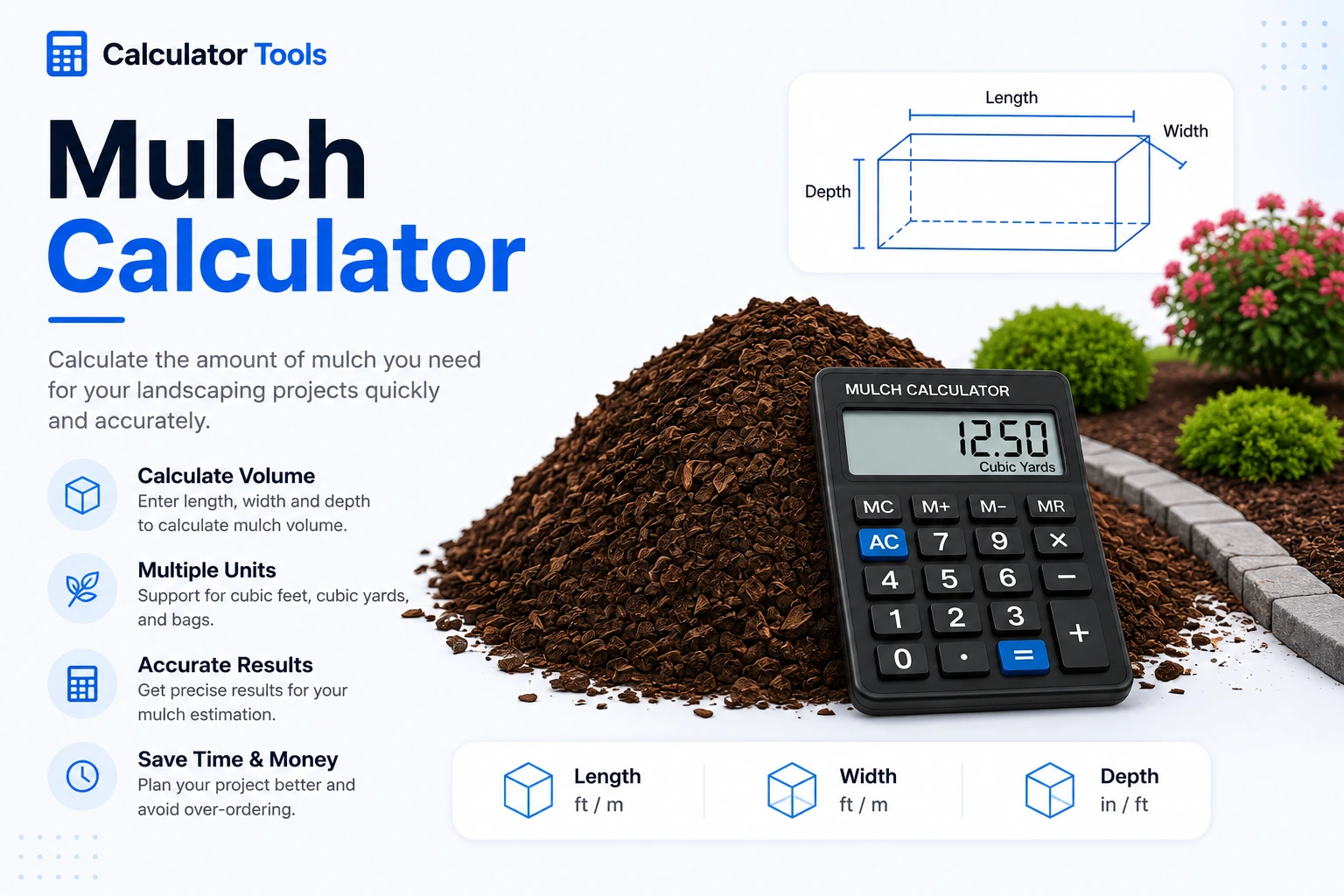
Calculating mulch in cubic yards helps you determine exactly how much mulch is needed for flower beds, garden borders, trees, pathways, and landscaping projects. To find the required mulch volume, multiply the length, width, and depth of the area, then divide the result by 27.
Example Calculation
Suppose you want to add mulch to a garden bed with the following dimensions:
- Length: 20 feet
- Width: 10 feet
- Mulch Depth: 3 inches
First, convert the mulch depth from inches to feet:
Next, calculate the total cubic feet:
Finally, convert cubic feet to cubic yards:
You would need approximately 1.85 cubic yards of mulch to cover the area with a 3-inch mulch layer.
Recommended Mulch Depth
Most landscaping professionals recommend applying mulch at a depth of 2 to 4 inches. A thinner layer may not effectively prevent weeds, while an excessively thick layer can restrict airflow and water movement around plants.
Mulch Coverage Chart
Use this mulch coverage chart to estimate how much area one cubic yard of mulch can cover at different depths. Deeper mulch layers provide better weed control and moisture retention but cover less area.
| Mulch Depth | Coverage Per Cubic Yard | Best For |
|---|---|---|
| 1 Inch | 324 sq ft | Light Decorative Coverage |
| 2 Inches | 162 sq ft | General Landscaping |
| 3 Inches | 108 sq ft | Most Recommended Depth |
| 4 Inches | 81 sq ft | Maximum Weed Control |
| 5 Inches | 65 sq ft | Heavy Mulch Applications |
Quick Tip
For most flower beds and landscape areas, a mulch depth of 3 inches provides the best balance between moisture retention, weed suppression, and coverage area.
Types of Mulch
Choosing the right mulch can improve plant health, reduce weeds, and enhance the appearance of your landscape. Mulch is generally divided into two categories: organic mulch and inorganic mulch.
Organic Mulch
Organic mulch is made from natural materials that gradually decompose and improve soil quality over time.
- Bark Mulch
- Wood Chips
- Shredded Hardwood
- Pine Straw
- Compost
- Leaves
Inorganic Mulch
Inorganic mulch does not decompose and is commonly used for decorative landscaping and long-term ground coverage.
- Rubber Mulch
- Landscape Fabric
- Gravel
- Decorative Stone
- Lava Rock
Best Mulch for Most Gardens
For flower beds, trees, shrubs, and vegetable gardens, organic mulch such as bark mulch or shredded hardwood is usually the best choice. It improves soil structure while helping retain moisture and suppress weeds.
Mulch Calculator FAQs
Find answers to common questions about mulch coverage, mulch depth, cubic yards, and landscaping projects.
How much area does 1 cubic yard of mulch cover?
One cubic yard of mulch covers approximately 108 square feet at a depth of 3 inches. Coverage varies depending on the depth of the mulch layer.
How many bags of mulch are in a cubic yard?
One cubic yard is equal to approximately 13.5 bags of mulch when using standard 2-cubic-foot bags.
What is the recommended mulch depth?
Most landscaping professionals recommend a mulch depth of 2 to 4 inches. Three inches is the most common depth for flower beds and gardens.
How do I calculate how much mulch I need?
Measure the length, width, and depth of the area. Multiply these values to find cubic feet, then divide by 27 to convert to cubic yards.
Is 3 inches of mulch too much?
No. A 3-inch layer is considered ideal for most landscaping projects because it helps retain moisture and suppress weeds without restricting airflow.
How often should mulch be replaced?
Organic mulch typically needs replenishment every 1 to 2 years as it naturally decomposes and settles over time.
What type of mulch lasts the longest?
Hardwood bark mulch, cedar mulch, and inorganic options such as rubber mulch generally last longer than shredded wood mulch.
Can I put new mulch over old mulch?
Yes. In most cases, you can add a fresh layer of mulch over existing mulch. However, avoid creating a layer thicker than 4 inches.