Cubic Yard Calculator for Sand
Use this Sand Calculator to calculate sand volume in cubic yards, cubic feet, and cubic meters. Estimate the amount of sand required for patios, pavers, landscaping, playgrounds, and other construction projects.
Sand Results
How to Use the Sand Calculator
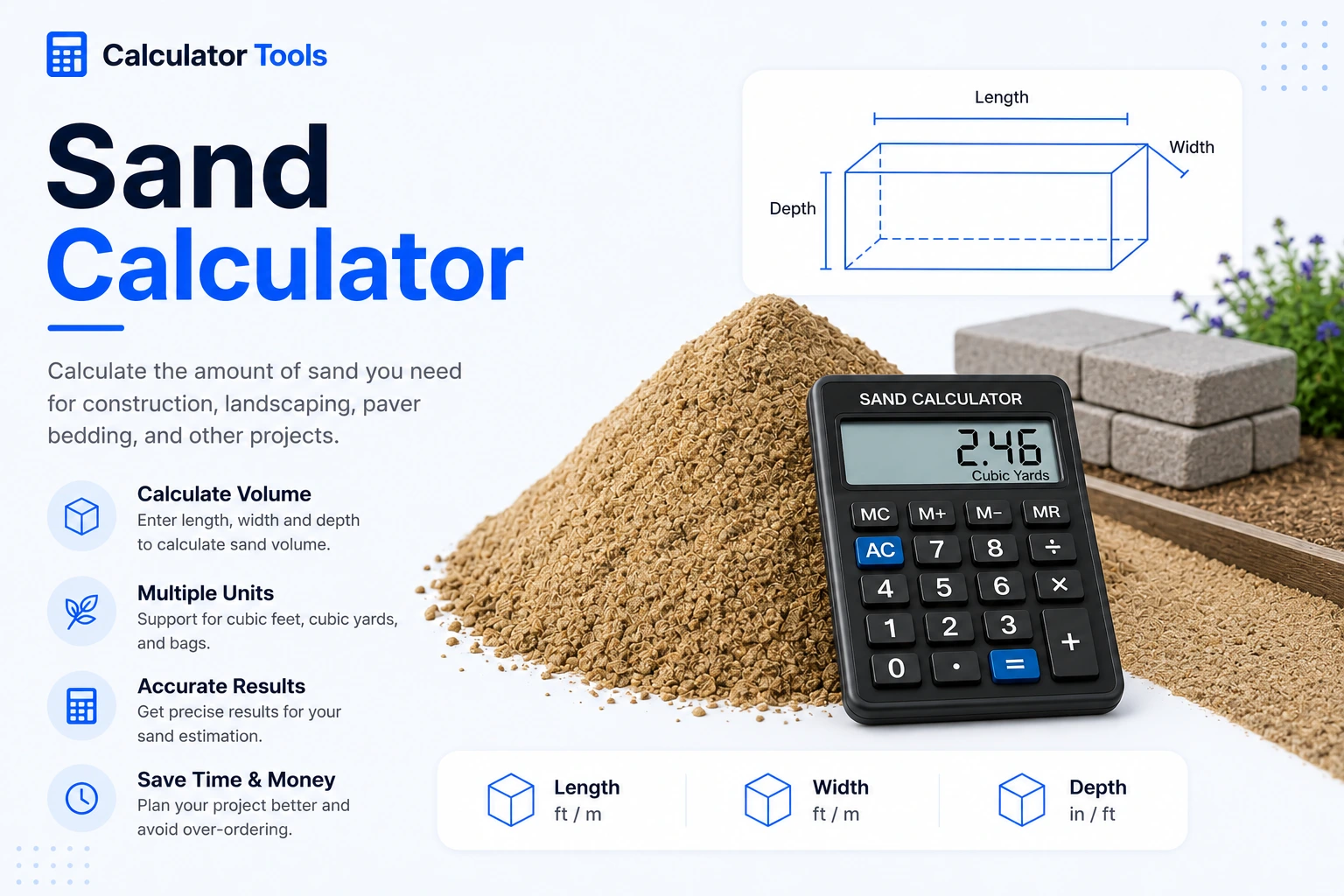
The Sand Calculator helps estimate the amount of sand required for patios, pavers, landscaping, playgrounds, and construction projects. Enter your area dimensions and sand depth to instantly calculate sand volume in cubic yards, cubic feet, and cubic meters.
How to Calculate Sand Requirements
Follow these simple steps to determine how much sand your project requires:
- Step 1: Select the shape of the area.
- Step 2: Enter the length and width (or diameter).
- Step 3: Enter the desired sand depth.
- Step 4: Choose the sand type.
- Step 5: Click the Calculate Sand button.
The calculator automatically determines the total sand volume and converts it into cubic yards for ordering and delivery purposes.
To convert cubic feet into cubic yards:
Example Calculation
Suppose you want to fill a patio base with sand using the following measurements:
- Length: 20 feet
- Width: 10 feet
- Depth: 4 inches
First, convert the sand depth from inches to feet:
Next, calculate the total volume in cubic feet:
Convert cubic feet to cubic yards:
You would need approximately 2.44 cubic yards of sand to cover the area with a 4-inch layer of sand.
Recommended Sand Depth
The ideal sand depth depends on the project. Paver installations typically use a thin bedding layer, while playgrounds and landscaping projects often require deeper sand coverage.
Types of Sand and Their Uses
Different types of sand are designed for specific construction, landscaping, and outdoor projects. Choosing the right sand helps improve stability, drainage, appearance, and overall project performance.
Fill Sand
Fill sand is commonly used for leveling ground, filling holes, grading landscapes, and creating a stable base for construction projects. It is one of the most affordable sand options.
Mason Sand
Mason sand is finely screened and washed, making it ideal for masonry work, mortar mixing, playgrounds, volleyball courts, and decorative landscaping applications.
Concrete Sand
Concrete sand is a coarse sand commonly used in concrete mixes, paver bases, drainage systems, and construction projects that require strength and stability.
Play Sand
Play sand is cleaned, washed, and screened to create a soft texture. It is widely used in playgrounds, sandboxes, recreational areas, and children’s play spaces.
Paver Sand
Paver sand is specifically designed for installing pavers, patios, walkways, and hardscape projects. It helps lock pavers in place and improves surface stability.
River Sand
River sand is naturally formed and collected from riverbeds. It is commonly used for landscaping, concrete production, masonry work, and general construction applications.
How to Choose the Right Sand
The best sand depends on your project requirements. Use fill sand for grading and leveling, paver sand for patios and walkways, mason sand for decorative projects, concrete sand for structural work, and play sand for recreational areas. Since different sand types also vary in density and weight, refer to our Sand Density Chart to compare common sand types before estimating the amount of material you need.
Sand Weight Chart
The weight of sand varies depending on its type, moisture content, and compaction. The chart below provides approximate weights per cubic yard for common sand types to help estimate transportation requirements, delivery costs, and material quantities.
| Sand Type | Approx. Weight per Cubic Yard | Common Uses |
|---|---|---|
| Fill Sand | 1.35 Tons | Grading, leveling, backfilling |
| Mason Sand | 1.30 Tons | Mortar, masonry, landscaping |
| Concrete Sand | 1.40 Tons | Concrete mixes, paver bases |
| Play Sand | 1.25 Tons | Playgrounds, sandboxes |
| Paver Sand | 1.35 Tons | Patios, walkways, paver joints |
| River Sand | 1.30 Tons | Construction, landscaping |
Why Sand Weight Matters
Knowing the estimated weight of sand helps calculate delivery costs, determine truck capacity, and ensure you order the correct amount of material. Wet sand is significantly heavier than dry sand, so actual weights may vary depending on weather conditions and moisture content.
Frequently Asked Questions
Find answers to common questions about sand volume, cubic yards, paver sand, construction sand, playground sand, and landscaping calculations.
How do I calculate how much sand I need?
Multiply the length, width, and depth of the area to find the volume in cubic feet. Then divide the result by 27 to convert cubic feet into cubic yards.
How many cubic yards of sand do I need?
The amount of sand required depends on the dimensions and depth of the area. A sand calculator provides a quick and accurate estimate in cubic yards.
How much does a cubic yard of sand weigh?
A cubic yard of sand typically weighs between 1.25 and 1.40 tons, depending on the type of sand and its moisture content.
How do I convert cubic feet to cubic yards?
Divide the total cubic feet by 27. Since one cubic yard equals 27 cubic feet, this conversion provides the required volume in cubic yards.
What type of sand is best for pavers?
Paver sand is specifically designed for paver installations. It helps create a stable base and locks pavers in place for long-term durability.
What is the difference between mason sand and concrete sand?
Mason sand is finer and smoother, making it suitable for masonry and decorative applications, while concrete sand is coarser and commonly used in concrete mixes and paver bases.
How much sand do I need for a patio?
The amount of sand depends on the patio dimensions and desired depth. Most patio projects use a sand layer between 1 and 2 inches thick beneath pavers.
Can I use this sand calculator for playground sand?
Yes, the calculator can be used to estimate playground sand, sandbox sand, and other recreational sand projects by entering the correct dimensions and depth.
Should I order extra sand?
Yes, it is recommended to order 5–10% extra sand to account for settling, compaction, uneven surfaces, and minor measurement errors.
What type of sand is best for landscaping?
Fill sand and river sand are commonly used for landscaping projects, leveling areas, improving drainage, and creating a stable foundation for outdoor features.