Soil Volume Guide
Understanding soil volume is essential for landscaping, gardening, lawn renovation, and raised bed projects. Estimating the correct amount of soil helps reduce waste, improve project planning, and ensure plants have enough growing space. This guide explains common soil depths, project requirements, and factors that influence soil volume estimates.
Why Soil Volume Matters
Accurate soil volume estimates help homeowners and landscapers order the right amount of material while avoiding unnecessary expenses and project delays.
Accurate Ordering
Helps prevent material shortages and excess soil purchases.
Cost Savings
Ordering the correct amount of soil reduces waste and transportation costs.
Better Plant Growth
Adequate soil depth supports healthy root development.
Efficient Planning
Accurate estimates make landscaping and gardening projects easier to manage.
Common Soil Depth Recommendations
Different projects require different soil depths. The following recommendations are commonly used for residential landscaping and gardening applications.
| Project Type | Recommended Soil Depth |
|---|---|
| Lawn Repair | 2–4 Inches |
| New Lawn Installation | 4–6 Inches |
| Flower Beds | 6–8 Inches |
| Vegetable Gardens | 8–12 Inches |
| Raised Garden Beds | 12–24 Inches |
Soil Volume by Project Type
Soil requirements vary depending on the intended use of the area. Understanding typical applications can help improve planning accuracy.
Raised Garden Beds
Raised beds generally require the largest volume of soil because of their increased depth.
Lawn Leveling
Lawn leveling projects usually require only a thin layer of topsoil.
Flower Beds
Flower beds often use enriched soil to support healthy blooms and root growth.
Landscape Areas
Large landscape projects may require significant soil volumes depending on grading requirements.
Soil Volume Example
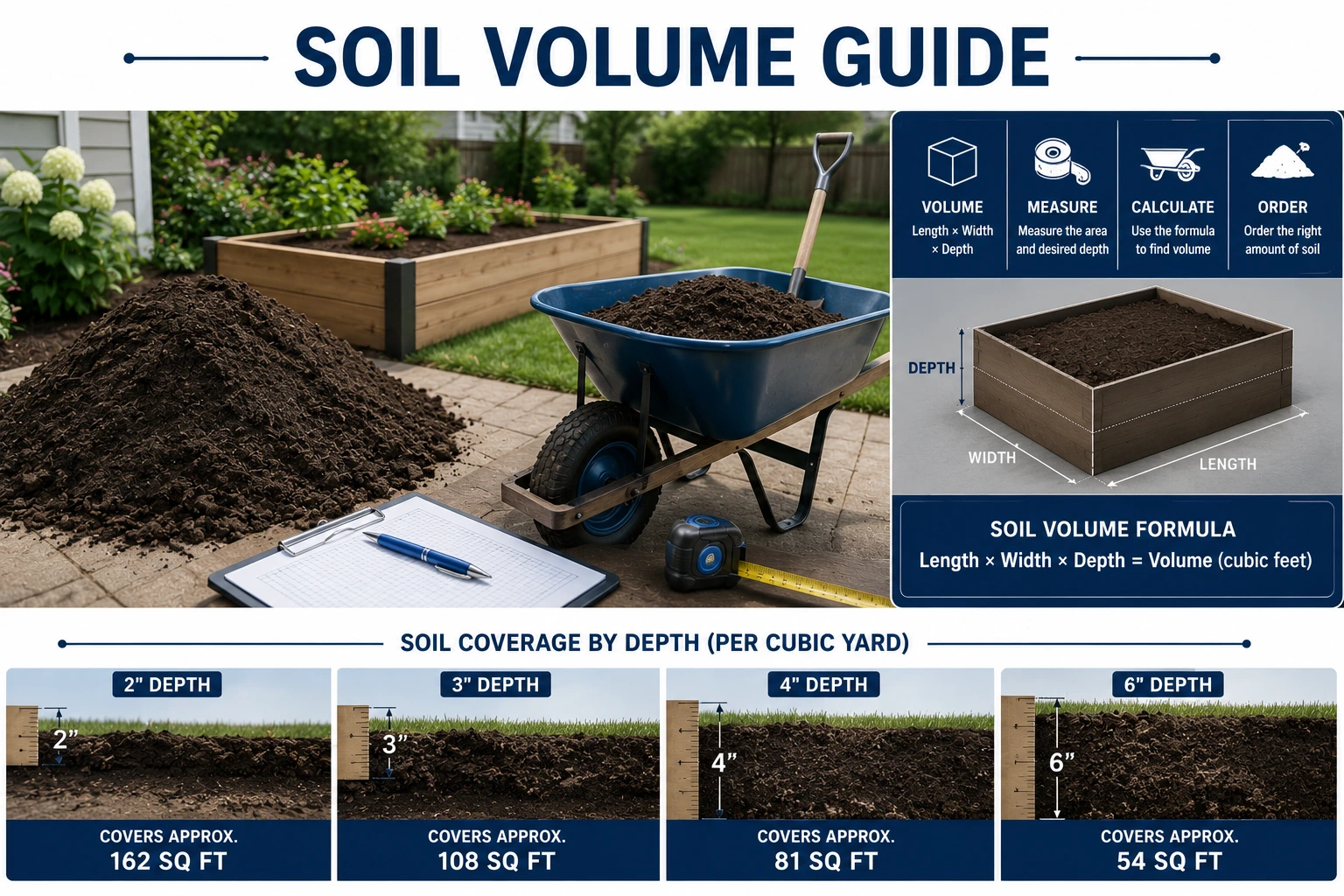
The example below demonstrates a simple soil volume estimate for a garden project.
Raised Bed Example
- Length: 20 Feet
- Width: 10 Feet
- Depth: 6 Inches (0.5 Feet)
- Volume: 100 Cubic Feet
- Equivalent: Approximately 3.7 Cubic Yards
Factors That Affect Soil Requirements
Soil volume estimates provide a useful starting point, but actual material requirements can vary depending on site conditions and project goals.
Soil Compaction
Compacted soil occupies less space than loose soil, which can affect final volume requirements.
Ground Conditions
Uneven surfaces, low spots, and slopes may require additional soil to achieve a consistent finish.
Settling After Installation
Newly placed soil often settles after watering and rainfall, reducing its original depth.
Organic Matter Content
Soils with high organic content may decompose over time, slightly changing overall volume.
Common Soil Ordering Mistakes
Avoiding these common mistakes can help ensure your project receives the correct amount of soil.
Incorrect Measurements
Measuring length, width, or depth inaccurately can significantly impact volume estimates.
Ignoring Settling
Failing to account for settling may result in insufficient soil after installation.
Choosing the Wrong Depth
Different landscaping and gardening projects require different soil depths for best results.
Not Allowing for Waste
Small losses during transportation and installation can affect final material requirements.
Need an Exact Soil Estimate?
Volume charts and guides are helpful for planning, but every project is different. Use our Soil Calculator to calculate cubic yards, cubic feet, cubic meters, and total soil requirements instantly.
Use Soil CalculatorFrequently Asked Questions
Does soil settle after installation?
Yes. Newly installed soil commonly settles after watering, rainfall, and natural compaction over time.
Should I order extra soil for my project?
Many landscapers recommend ordering a small amount of extra soil to account for settling and uneven ground conditions.
What is the difference between topsoil and garden soil?
Topsoil is the upper layer of natural soil, while garden soil is often blended with compost and organic matter to improve plant growth.
Can soil volume change after compaction?
Yes. Compacted soil takes up less space than loose soil, which can affect final volume measurements.
How deep should soil be for vegetable gardens?
Most vegetables grow best in soil that is 8 to 12 inches deep, allowing roots enough space to develop properly.
What soil works best for raised beds?
Raised beds are commonly filled with a mixture of topsoil, compost, and organic matter for improved drainage and fertility.
Why is bulk soil sold by cubic yards?
Cubic yards provide a standard unit of volume, making it easier to estimate and compare bulk soil quantities.
Can soil volume estimates be completely accurate?
Estimates are usually very close, but factors such as settling, compaction, and site conditions can affect actual requirements.
Does wet soil weigh more than dry soil?
Yes. Water adds significant weight to soil, which can impact transportation and handling.
How often should topsoil be added to a landscape?
This depends on soil quality and project needs, but periodic topdressing is often used to maintain healthy growing conditions.