Mulch Coverage Guide
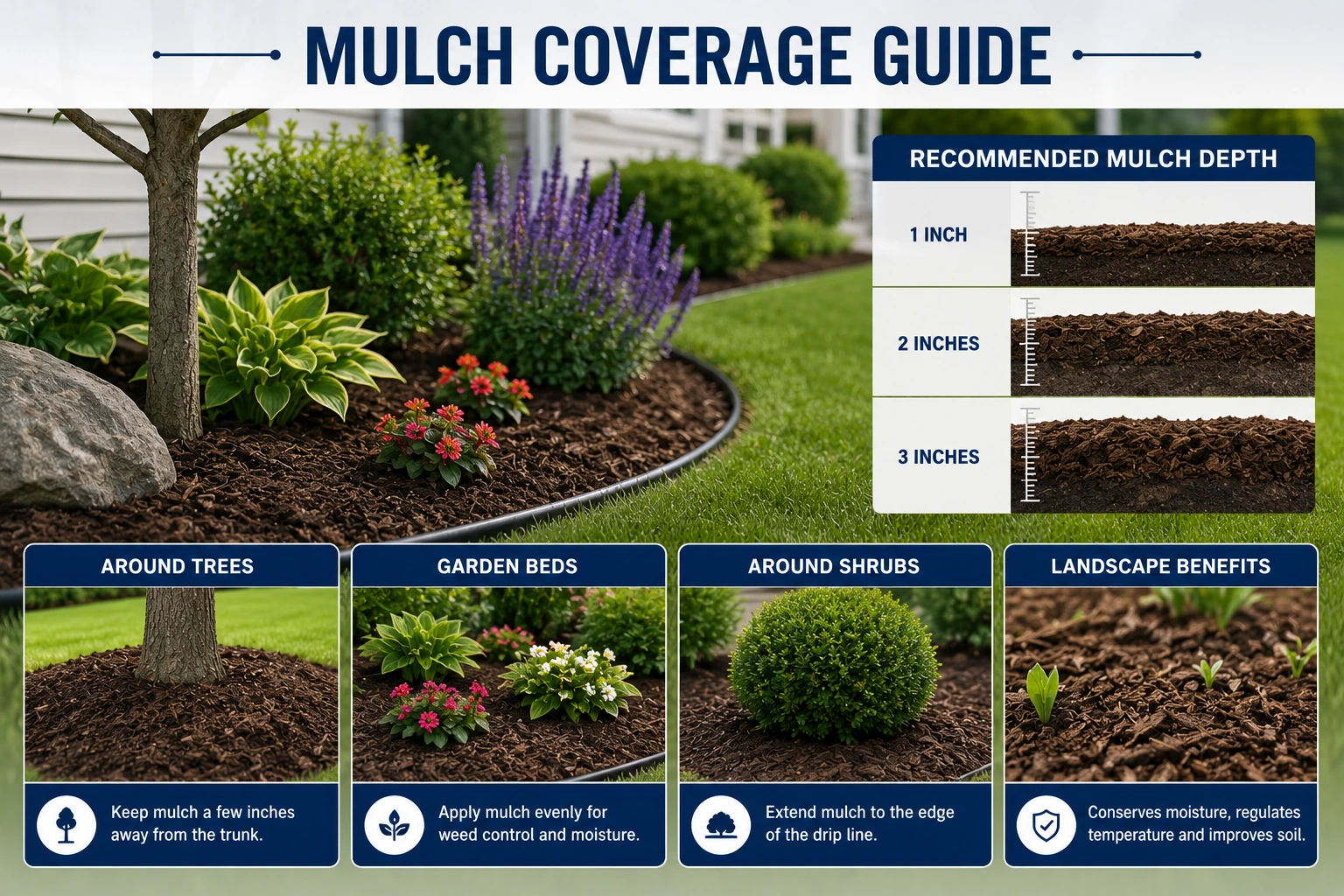
Proper mulch coverage helps improve landscape appearance, retain soil moisture, suppress weeds, and protect plant roots. Understanding how mulch coverage changes with depth allows homeowners and landscapers to plan projects more accurately and avoid purchasing too much or too little material.
Why Mulch Coverage Matters
Applying the correct amount of mulch is important for both plant health and landscape performance. Insufficient coverage may reduce weed control and moisture retention, while excessive coverage can restrict airflow and affect plant growth.
Moisture Conservation
Mulch helps reduce evaporation and keeps soil moist for longer periods.
Weed Suppression
Proper coverage limits sunlight exposure and helps prevent weed growth.
Temperature Control
Mulch insulates soil and helps protect plant roots from extreme temperatures.
Landscape Appearance
Even mulch coverage creates a clean and professional-looking landscape.
Mulch Coverage by Application Depth
Coverage depends on how deeply mulch is applied. As depth increases, the total area covered by one cubic yard decreases.
| Mulch Depth | Approximate Coverage per Cubic Yard |
|---|---|
| 2 Inches | 162 Square Feet |
| 3 Inches | 108 Square Feet |
| 4 Inches | 81 Square Feet |
| 5 Inches | 65 Square Feet |
| 6 Inches | 54 Square Feet |
Common Areas Where Mulch Is Used
Mulch can be applied in many residential and commercial landscaping projects. Each application may require different coverage depths depending on the desired results.
Flower Beds
Decorative mulch helps conserve moisture while improving the appearance of planting areas.
Tree Rings
Mulch protects roots and reduces competition from weeds and grass.
Garden Borders
A mulch layer creates cleaner edges and improves landscape organization.
Landscape Islands
Mulch enhances curb appeal while helping maintain healthy soil conditions.
Mulch Coverage Example
The example below demonstrates how mulch coverage requirements change based on project size.
Landscape Bed Example
- Area Size: 200 Square Feet
- Mulch Depth: 3 Inches
- Coverage per Cubic Yard: 108 Square Feet
- Mulch Needed: Approximately 1.85 Cubic Yards
Factors That Affect Mulch Coverage
Actual mulch coverage may vary from one project to another. Several factors influence how much area a given amount of mulch can cover.
Mulch Material
Shredded hardwood, bark mulch, pine nuggets, and wood chips settle differently after installation.
Moisture Content
Wet mulch tends to be heavier and may compact more than dry mulch.
Surface Conditions
Sloped or uneven areas often require additional mulch to maintain consistent depth.
Settling Over Time
Organic mulch gradually decomposes and settles, reducing its original coverage depth.
Common Mulch Coverage Mistakes
Avoiding these common mistakes can help improve mulch performance and maximize coverage.
Uneven Distribution
Inconsistent spreading can create areas with too much or too little mulch coverage.
Ignoring Settling
Newly installed mulch often settles after rainfall and natural decomposition.
Mulch Volcanoes
Piling mulch against tree trunks can trap moisture and increase the risk of disease.
Overestimating Coverage
Assuming one cubic yard covers more area than it actually does can result in material shortages.
Need an Exact Mulch Estimate?
Coverage charts provide useful guidelines, but every landscaping project is unique. Use our Mulch Calculator to calculate mulch volume, coverage area, cubic yards, and material requirements instantly.
Use Mulch CalculatorFrequently Asked Questions
Does mulch settle over time?
Yes. Most organic mulches gradually break down and compact, reducing their original depth and coverage.
Does wet mulch cover less area than dry mulch?
Wet mulch may compact more during installation, which can slightly reduce effective coverage.
Which mulch provides the best weed suppression?
Hardwood mulch and bark mulch are commonly used for weed control because they create a dense protective layer over the soil.
Can mulch improve soil quality?
Yes. Organic mulches decompose over time and add nutrients and organic matter to the soil.
Does mulch help retain soil moisture?
Mulch reduces evaporation and helps maintain more consistent soil moisture levels.
Should mulch touch plant stems or tree trunks?
No. Mulch should be kept several inches away from stems and trunks to prevent rot and pest problems.
Is dyed mulch safe for landscaping?
Commercially produced dyed mulch is generally considered safe for most residential landscaping applications.
Can mulch help prevent soil erosion?
Yes. Mulch protects exposed soil from rainfall impact and helps reduce erosion on slopes and garden beds.
What is the difference between hardwood mulch and bark mulch?
Hardwood mulch is typically made from shredded wood, while bark mulch is produced primarily from tree bark and often lasts longer.
Does mulch attract insects?
Some insects naturally live in mulch, but properly maintained mulch does not usually create significant pest problems.