Bulk Landscaping Materials Checklist: 15 Things to Know Before Ordering
Introduction
Ordering bulk landscaping materials may seem straightforward, but a few small mistakes can quickly turn an affordable project into an expensive one. Ordering too much wastes money and creates disposal problems, while ordering too little can delay your project and increase delivery costs.
Whether you’re buying gravel, topsoil, sand, mulch, crushed stone, or concrete materials, proper planning before placing your order helps save time, reduce waste, and avoid unexpected surprises on delivery day.
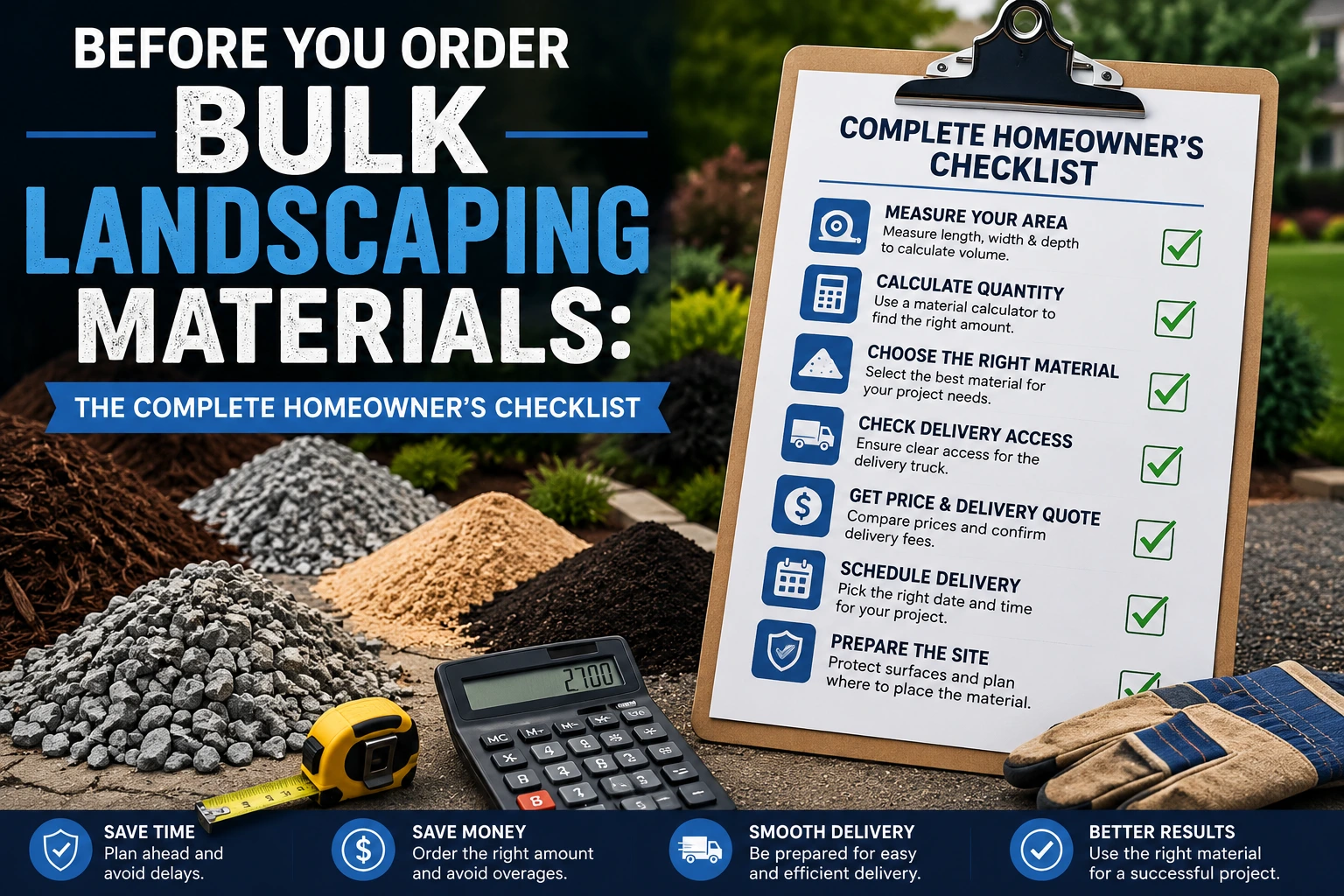
This complete homeowner’s checklist walks you through the most important things to verify before ordering bulk materials. By following these practical tips, you’ll be better prepared to choose the right material, estimate the correct quantity, schedule delivery, and complete your project efficiently.
Why Planning Before Ordering Matters
Many homeowners focus only on the price per cubic yard and forget about the planning process. However, successful landscaping projects begin long before the delivery truck arrives.
Proper preparation helps you:
- Reduce material waste
- Avoid expensive second deliveries
- Prevent project delays
- Improve installation quality
- Stay within your budget
- Make better purchasing decisions
Spending just a few extra minutes planning your order can save hundreds of dollars on larger landscaping projects.
1. Confirm Your Project Measurements
Before ordering any material, make sure you’ve measured the project area carefully.
Double-check:
- Length
- Width
- Required depth
- Areas with curves or irregular shapes
Even a small measurement mistake can significantly change the amount of material you’ll need.
Helpful Tool:
Use the calculator to estimate the correct material volume before requesting supplier quotes.
2. Choose the Right Material for Your Project
Not every landscaping material is suitable for every job.
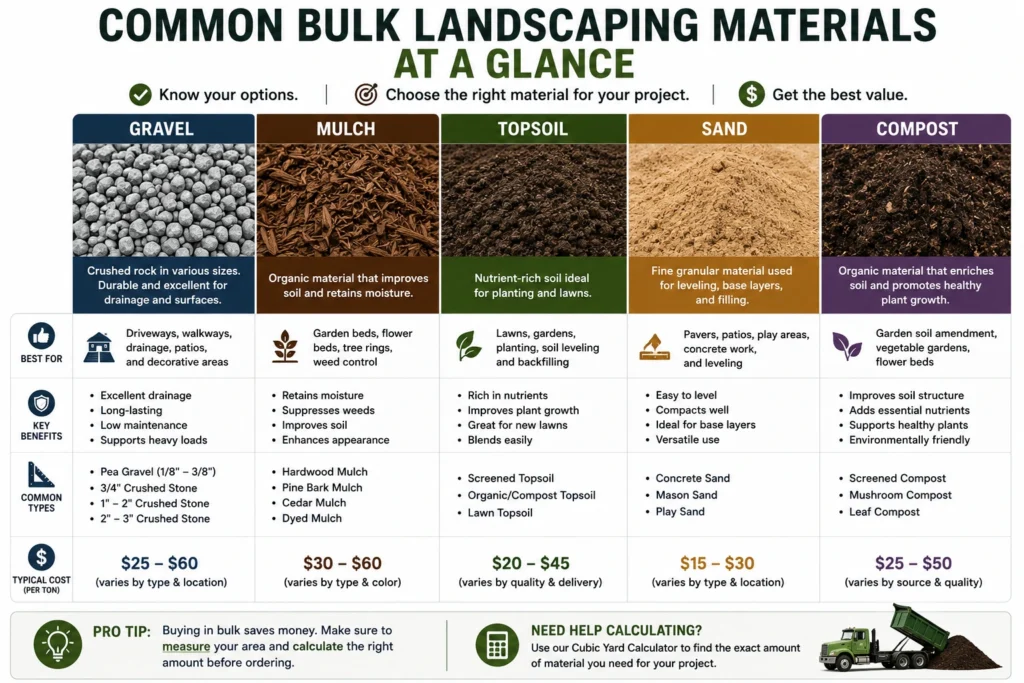
For example:
| Project | Recommended Material |
| Driveway | Crushed Gravel |
| Garden Beds | Topsoil |
| Playground | Play Sand |
| Decorative Areas | Mulch |
| Concrete Projects | Concrete Mix & Aggregate |
Choosing the wrong material often results in poor drainage, reduced durability, or unnecessary maintenance costs.
3. Verify the Recommended Installation Depth
One of the most common ordering mistakes is guessing the depth.
Different materials require different installation depths depending on the project.
For example:
- Decorative mulch
- Gravel pathways
- Driveways
- Garden soil
- Concrete bases
Always follow the recommended depth for your specific project instead of estimating.
This improves both material coverage and long-term performance.
4. Understand Delivery Requirements
Before scheduling delivery, inspect your property.
Ask yourself:
- Can a dump truck reach the delivery location?
- Is the driveway wide enough?
- Are there low tree branches?
- Are there overhead power lines?
- Is the ground stable enough to support a fully loaded truck?
Preparing the site in advance helps prevent delays and reduces the risk of property damage.
5. Decide Where the Material Will Be Dumped
Bulk materials are difficult to move after delivery.
Choose a dumping location that:
- Is close to the work area
- Doesn’t block vehicles
- Doesn’t damage lawns
- Allows wheelbarrow access
- Remains accessible during the entire project
A few minutes of planning can save hours of unnecessary labor.
6. Inspect Material Quality Before Accepting Delivery
Once your materials arrive, don’t assume everything is correct just because the order matches your invoice. Take a few minutes to inspect the load before the truck leaves if possible.
Check for:
- Consistent color and texture
- Excessive debris or trash
- Large rocks in soil or mulch
- Signs of contamination
- Excessive moisture if you ordered dry material
If the material doesn’t match what you ordered, contact the supplier immediately. Resolving the issue before unloading is usually much easier than requesting a replacement later.
7. Consider the Weather Before Scheduling Delivery
Weather can have a bigger impact on landscaping materials than many homeowners realize.
For example:
- Heavy rain can saturate soil and sand, making them heavier and more difficult to spread.
- Wet mulch may develop mold if left in a pile for several days.
- Frozen ground can delay grading and installation.
- Strong winds can make spreading lightweight mulch difficult.
Whenever possible, schedule your delivery during a period of dry, stable weather.
8. Decide Whether Bulk or Bagged Materials Make More Sense
Many homeowners automatically choose bagged products without comparing costs.
In general:
| Bulk Materials | Bagged Materials |
| Lower cost for large projects | Better for small repairs |
| Faster delivery | Easier to transport by hand |
| Less packaging waste | Convenient for limited storage |
| Ideal for driveways, patios, and landscaping | Ideal for small gardens and touch-up work |
If your project requires several cubic yards of material, bulk delivery is usually the more economical option.
9. Don’t Forget to Include a Waste Factor
Even with careful measurements, very few landscaping projects use the exact amount of material originally estimated.
Small variations occur because of:
- Uneven ground
- Material settling
- Compaction
- Spillage during installation
- Final grading adjustments
For most residential projects, ordering 5%–10% extra material helps prevent delays caused by running short before the project is finished.
Ordering a small amount of extra material is often less expensive than paying for a second delivery.
10. Ask Your Supplier the Right Questions
Before placing your order, don’t hesitate to ask a few important questions.
Some useful questions include:
- Is the quoted price per cubic yard or per ton?
- Are delivery charges included?
- Is there a minimum order quantity?
- Can the driver dump the material exactly where I need it?
- What happens if weather delays my project?
- What payment methods are accepted?
These questions help eliminate surprises and make comparing different suppliers much easier.
11. Prepare the Delivery Area
A few simple preparations can make delivery day much smoother.
Before the truck arrives:
- Move vehicles away from the unloading area.
- Remove outdoor furniture and decorations.
- Mark sprinkler heads or underground utilities if necessary.
- Keep children and pets away from the work area.
- Make sure gates are unlocked and accessible.
A clear delivery area reduces unloading time and helps prevent accidental property damage.
12. Plan How You’ll Move the Material
Bulk materials are usually dumped in one pile, but your project may cover a much larger area.
Before delivery, make sure you have the necessary equipment, such as:
- Wheelbarrows
- Shovels
- Landscape rakes
- Garden carts
- Work gloves
Planning ahead will save time and reduce physical effort during installation.
13. Store Leftover Material Properly
It’s common to have a small amount of material left after completing a project.
Instead of throwing it away:
- Store mulch in a dry location.
- Cover sand and soil with a tarp to reduce moisture.
- Keep gravel in a designated storage area for future repairs.
- Protect unused materials from heavy rain whenever possible.
Proper storage extends the life of leftover materials and can save money on future landscaping projects.
Quick Pre-Order Checklist
Before confirming your order, use this simple checklist to avoid common problems.
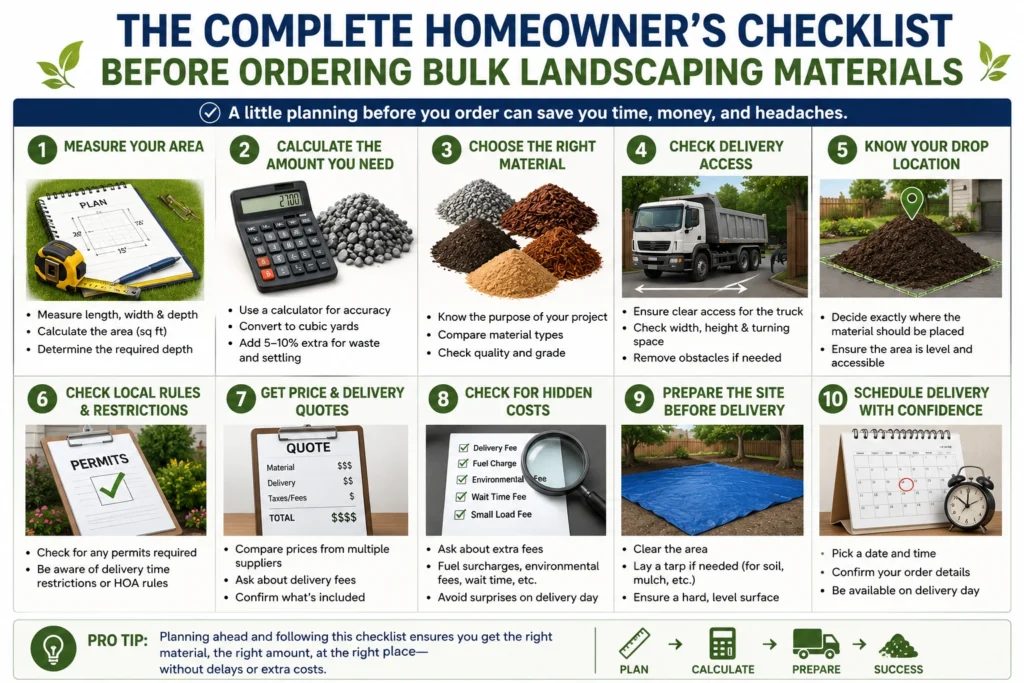
✅ Measured the project area accurately
✅ Chosen the correct material for the job
✅ Verified the recommended installation depth
✅ Calculated the required quantity
✅ Added a small waste allowance
✅ Compared prices from multiple suppliers
✅ Confirmed delivery fees and minimum order requirements
✅ Prepared the delivery location
✅ Checked the weather forecast
✅ Gathered the necessary tools for installation
Taking just a few minutes to review this checklist can help prevent unnecessary expenses and project delays.
Common Mistakes to Avoid
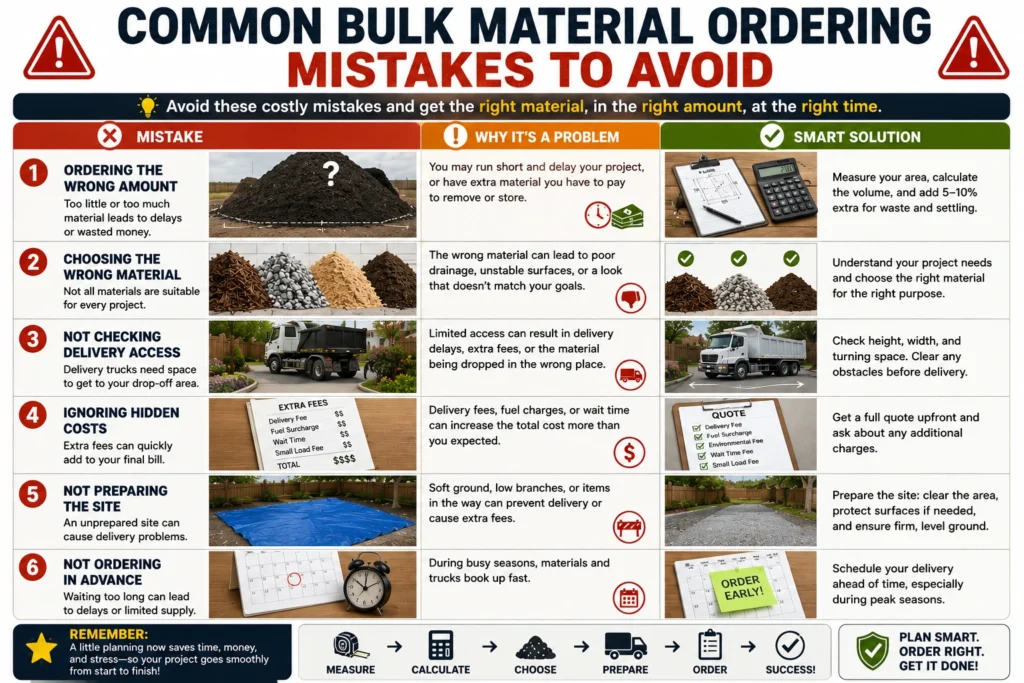
Even experienced homeowners occasionally make ordering mistakes. Being aware of these common issues can save both time and money.
Ordering Based Only on Price
The lowest price isn’t always the best value. Poor-quality materials or hidden delivery fees can end up costing more in the long run.
Forgetting Delivery Access
Many deliveries are delayed because trucks can’t safely reach the intended unloading location. Always confirm access before placing your order.
Ordering the Wrong Material
Using decorative gravel for a driveway or landscape mulch for erosion control can reduce the performance and lifespan of your project.
Choose materials based on the project’s requirements rather than appearance alone.
Ignoring Weather Conditions
Scheduling delivery during heavy rain or freezing conditions can make installation more difficult and affect material quality.
Waiting Until the Last Minute
Popular landscaping materials may sell out during spring and summer. Ordering a little earlier gives you more supplier options and better scheduling flexibility.
Frequently Asked Questions
How far in advance should I order bulk landscaping materials?
For most residential projects, ordering 3 to 7 days before installation provides enough time for delivery scheduling while reducing the chance of project delays.
Should I order extra material?
Yes. Most professionals recommend allowing a 5–10% waste factor to account for uneven ground, compaction, and minor installation losses.
Is bulk material cheaper than buying bags?
For medium and large projects, bulk delivery is usually more cost-effective because it reduces packaging costs and lowers the price per cubic yard.
Can I store leftover materials?
Yes. Gravel, sand, soil, and mulch can all be stored for future use when kept in a suitable location and protected from excessive moisture.
Final Thoughts
Ordering bulk landscaping materials isn’t just about choosing the lowest price—it’s about making informed decisions before the first truck arrives. Taking time to measure your project accurately, select the right material, prepare the delivery area, and understand supplier policies can help you avoid unnecessary costs and complete your project with confidence.
Whether you’re installing a new driveway, refreshing garden beds, building a patio, or tackling a larger landscaping project, a little planning goes a long way. Following the checklist in this guide will help you reduce waste, stay within budget, and ensure your materials are ready when you need them.
Related Resources
To help plan your project even more accurately, you may also find these resources useful:
Calculators
- Cubic Yard Calculator
- Concrete Calculator
- Gravel Calculator
- Soil Calculator
- Sand Calculator
- Mulch Calculator
Material Guides
- Concrete Thickness Guide
- Gravel Weight Guide
- Soil Volume Guide
- Mulch Coverage Guide
- Sand Density Chart
Conversion Tools
- Cubic Yards to Cubic Feet Converter
- Cubic Feet to Cubic Yards Converter
- Cubic Yards to Tons Converter
- Tons to Cubic Yards Converter
Expert Tips Before Ordering Bulk Landscaping Materials
Before placing your order, take time to verify your measurements, confirm the correct material type, and discuss delivery details with your supplier. Small planning mistakes can lead to unnecessary expenses, project delays, or material shortages.
Every landscaping project is different. Factors such as soil conditions, drainage, climate, and local building practices may affect the amount and type of material required. For large driveways, retaining walls, structural concrete work, or other complex projects, it’s a good idea to consult an experienced contractor or landscape professional before ordering bulk materials.
For additional guidance, homeowners can also refer to educational resources published by the National Association of Landscape Professionals and the University of California Agriculture and Natural Resources, which provide practical information on landscape planning, installation, and maintenance.
For additional guidance on soil conservation, drainage, and sustainable land management practices, homeowners can explore educational resources provided by the USDA Natural Resources Conservation Service (NRCS). These resources offer practical information for planning landscaping and construction projects while protecting soil and water resources.