Gravel Size Chart Explained: Which Gravel Size Should You Choose?
Choosing the correct gravel size is one of the most important decisions for any landscaping or construction project. Whether you’re building a driveway, installing a French drain, pouring a concrete slab, or creating a decorative garden path, the size of the gravel directly affects drainage, stability, appearance, and long-term performance.
Many homeowners assume that all gravel is the same, but gravel is actually classified into different sizes using standardized grading systems. Names like #57 gravel, #67 gravel, or pea gravel refer to specific stone sizes designed for different applications.
In this guide, you’ll learn how gravel sizes are measured, what each gravel grade means, and which size works best for your project.
What Is Gravel Size?
Gravel size refers to the average diameter of individual stones after they have been crushed or naturally weathered.
Instead of measuring every rock individually, quarries separate gravel using a series of industrial screens with different-sized openings. Stones that pass through one screen but remain on another become a specific gravel grade.
For example:
- Small gravel is commonly used for decorative landscaping.
- Medium gravel works well for drainage systems.
- Larger gravel provides a stable foundation for roads and heavy construction.
Understanding these size differences helps you choose the right material the first time and avoid costly mistakes.
How Gravel Sizes Are Measured
Most construction aggregates are sorted using vibrating sieve screens.
Each screen contains openings of a specific size. As crushed stone moves across the screens, smaller particles fall through while larger stones remain on top.
This process creates standardized gravel sizes that suppliers can identify using grading numbers.
Gravel sizes are usually described using:
- Inches
- Millimeters (mm)
- Quarry grading numbers (#8, #57, #67, etc.)
Although exact specifications can vary slightly between suppliers, the grading system remains generally consistent throughout North America.
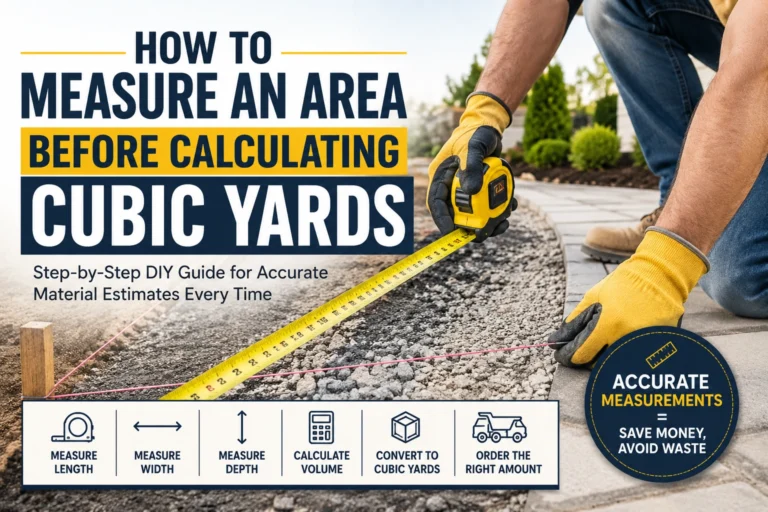
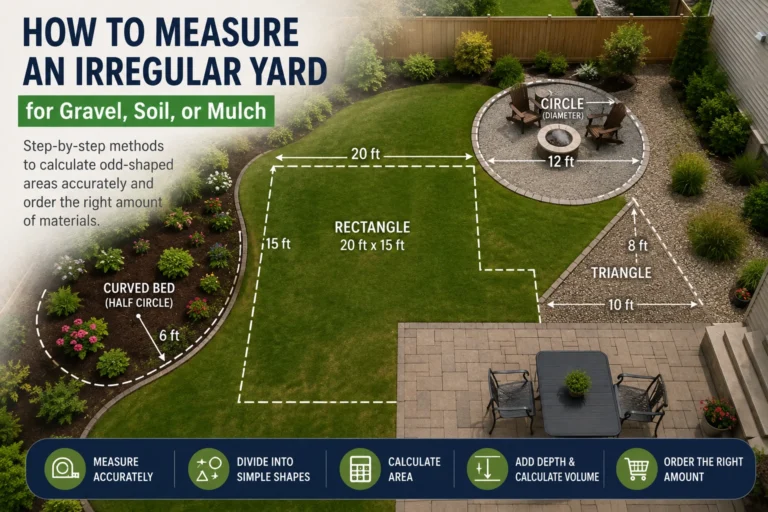
Choosing the correct gravel size starts with knowing exactly how much material your project needs. Before deciding between #57 gravel, pea gravel, or crusher run, use our Cubic Yard Calculator to estimate the required volume for driveways, landscaping, drainage systems, and construction projects accurately.
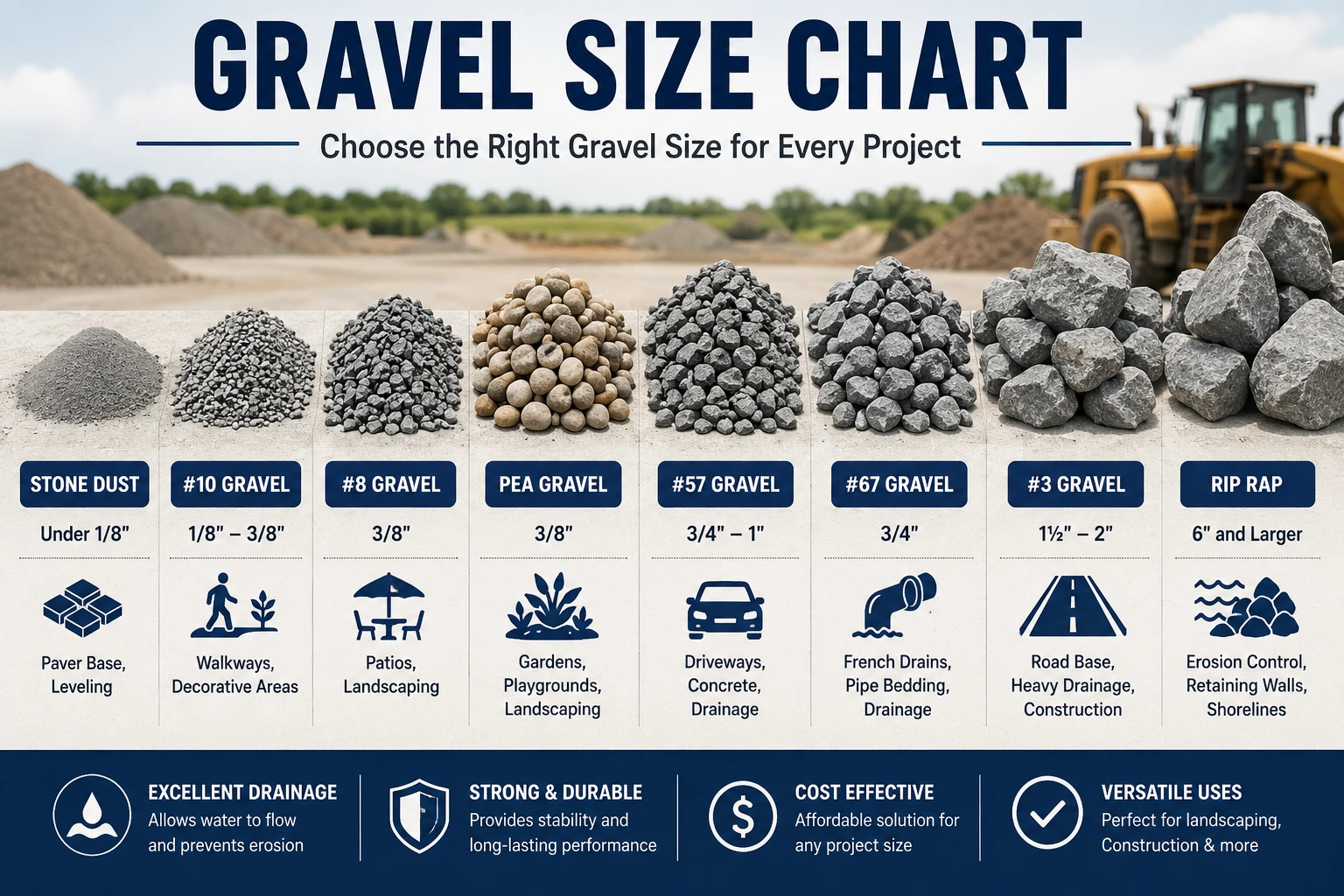
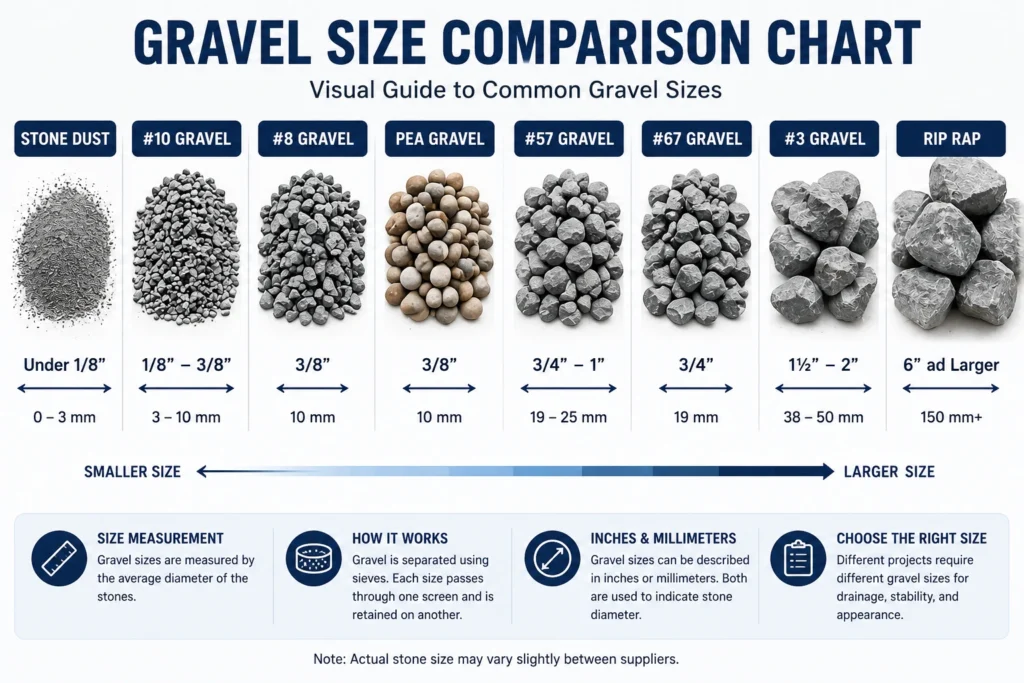
Complete Gravel Size Chart
| Gravel Grade | Approximate Size | Best Uses |
| Stone Dust | Under 1/8 inch | Paver base, leveling |
| #10 Gravel | 1/8″ – 3/8″ | Walkways, decorative areas |
| #8 Gravel | 3/8″ | Patios, pathways, landscaping |
| Pea Gravel | 3/8″ | Gardens, playgrounds, drainage |
| #57 Gravel | 3/4″ – 1″ | Driveways, concrete, drainage |
| #67 Gravel | 3/4″ | French drains, pipe bedding |
| #3 Gravel | 1½” – 2″ | Heavy drainage, road base |
| Rip Rap | 6″+ | Erosion control, retaining walls |
Different suppliers may list slightly different dimensions, but the intended applications remain similar.
Gravel comes in many different sizes, and each size is designed for specific construction, drainage, landscaping, or decorative applications. The chart below compares the most common gravel sizes so you can quickly choose the right material for your project.
Understanding Gravel Grade Numbers
One of the most confusing parts of buying gravel is understanding numbers like #57, #67, or #8.
These numbers are grading classifications used by aggregate producers. They do not represent the exact stone size in inches.
Instead, each number identifies a range of particle sizes that pass through specific screens during the crushing and sorting process.
This standardized grading allows contractors, suppliers, and engineers to order consistent materials for construction projects regardless of the quarry.
#10 Gravel
#10 gravel is one of the smallest crushed stone products available. The stones are roughly the size of small peas or coarse sand, making them suitable for projects that require a smooth finish rather than heavy structural support.
Because of its small particle size, #10 gravel compacts well and creates a relatively even surface. It is commonly used beneath pavers, around stepping stones, and in decorative landscaping where appearance is more important than load-bearing strength.
Best Uses
- Decorative garden borders
- Paver base material
- Walkways
- Landscaping accents
- Filling small gaps
Not Recommended For
- Heavy vehicle traffic
- Driveways
- Large drainage systems
#8 Gravel
#8 gravel is another fine aggregate commonly chosen for residential landscaping projects. Its rounded or slightly angular particles create a clean appearance while still allowing water to pass through.
Homeowners often use #8 gravel around flower beds, patios, and outdoor seating areas because it is comfortable to walk on and provides excellent drainage.
Advantages
- Attractive appearance
- Easy to spread
- Good drainage
- Comfortable underfoot
Common Applications
- Garden paths
- Patio edging
- Decorative rock beds
- Tree rings
Pea Gravel
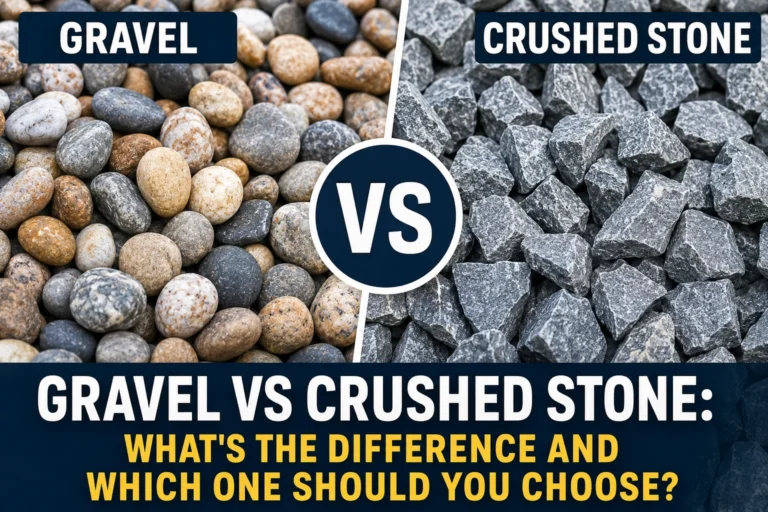
Pea gravel consists of naturally rounded stones rather than crushed angular rock. Its smooth texture makes it one of the most popular decorative gravels available.
Unlike crushed stone, pea gravel shifts easily under foot, making it less suitable for driveways but excellent for areas where appearance matters.
Best Projects
- Backyard landscaping
- Playground surfaces
- Garden beds
- Fire pit seating areas
- Around trees and shrubs
Pros
✔ Attractive natural colors
✔ Excellent drainage
✔ Easy to install
✔ Comfortable to walk on
Cons
✘ Can move easily
✘ Difficult to shovel
✘ Not ideal for steep slopes
#57 Gravel
#57 gravel is one of the most commonly used aggregate sizes in construction and landscaping. The stones are approximately 3/4 inch to 1 inch in diameter and provide an excellent balance between stability and drainage.
Because of its versatility, contractors frequently recommend #57 gravel for residential and commercial projects.
Best Uses
- Driveways
- Concrete mix
- French drains
- Septic systems
- Foundation drainage
- Retaining wall backfill
One reason #57 gravel is so popular is that it locks together better than rounded gravel while still allowing water to drain efficiently.
#67 Gravel
Although similar to #57 gravel, #67 gravel contains slightly smaller particles. This makes it easier to compact while still providing good drainage.
It is frequently selected for projects where a smoother finished surface is desired.
Common Uses
- Pipe bedding
- Drainage trenches
- Sidewalk base
- Concrete production
- Utility installations
If you’re unsure whether to choose #57 or #67 gravel, think of #57 as the stronger all-purpose option and #67 as the finer alternative for smaller applications.
#3 Gravel
#3 gravel contains much larger stones, usually between 1½ and 2 inches.
These large rocks are designed for projects requiring significant drainage capacity or structural support rather than decorative appearance.
Ideal Applications
- Heavy-duty drainage systems
- Road construction
- Large foundations
- Culverts
- Erosion control
Because of the large stone size, #3 gravel should not be used as a walking surface or decorative landscape material.
Crusher Run vs Gravel
Many homeowners confuse crusher run with standard gravel, but they serve different purposes.
| Crusher Run | Standard Gravel |
| Contains stone dust | Clean stone only |
| Compacts tightly | Drains better |
| Excellent road base | Better for drainage |
| Creates firm surface | Remains loose |
| Less water permeability | Higher water permeability |
Crusher run is generally chosen for building a stable foundation, while clean gravel is preferred wherever drainage is important.
Angular Gravel vs Rounded Gravel
Not all gravel has the same shape.
Angular Gravel
Angular gravel is produced by crushing larger rocks into smaller pieces.
Because the edges interlock, angular gravel provides:
- Better stability
- Higher load capacity
- Less movement
- Better traction
It is commonly used for driveways and road bases.
Rounded Gravel
Rounded gravel forms naturally through water erosion.
Its smooth edges make it ideal for:
- Landscaping
- Decorative gardens
- Water features
- Play areas
However, rounded gravel shifts more easily under pressure and is generally less stable than crushed stone.
Best Gravel Size for Different Projects
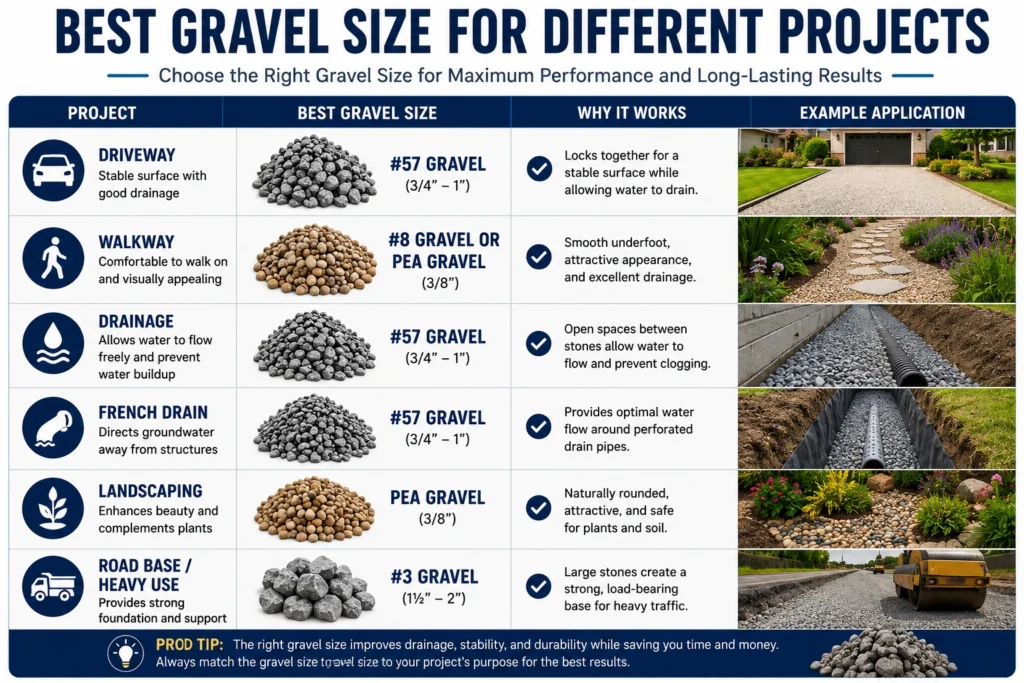
Different projects require different gravel sizes. Using the wrong type can reduce drainage, make surfaces unstable, or increase maintenance costs. The quick reference guide below helps you choose the best gravel size based on your specific project.
Best Gravel Size for Driveways
Choosing the right gravel size is essential if you want a driveway that is stable, drains well, and lasts for years.
Most professional driveway installations use multiple layers of gravel rather than a single size.
Typical Driveway Gravel Layers
| Layer | Recommended Gravel |
| Base Layer | #3 Gravel |
| Middle Layer | #57 Gravel |
| Top Layer | #8 Gravel or Crusher Run |
The larger stones in the base create a strong foundation, while the middle layer improves stability. A finer top layer provides a smoother driving surface.
For most residential driveways, #57 gravel is considered the best all-around choice because it offers an excellent balance between drainage and compaction.
Best Gravel Size for Walkways
Walkways require gravel that is comfortable to walk on while still providing adequate drainage.
Recommended options include:
- Pea Gravel
- #8 Gravel
- #10 Gravel
These smaller stones create a more even surface and are easier to walk on than larger crushed rock.
If your walkway receives heavy foot traffic, adding landscape edging can help keep the gravel in place.
Best Gravel Size for Drainage
Drainage systems require gravel with enough open space between stones to allow water to flow freely.
The most commonly used drainage gravel includes:
- #57 Gravel
- #67 Gravel
- #3 Gravel (for large drainage projects)
These sizes prevent water from becoming trapped while helping reduce soil erosion around foundations, retaining walls, and drainage trenches.
Best Gravel Size for French Drains
French drains are designed to move groundwater away from structures, making gravel selection especially important.
Most contractors recommend #57 gravel because it provides excellent water flow while surrounding perforated drain pipes effectively.
Smaller gravel or stone dust should generally be avoided because fine particles may clog the drainage system over time.
Best Gravel Size for Landscaping
The ideal gravel size depends on the appearance you want to achieve.
Decorative Gardens
- Pea Gravel
- #8 Gravel
Rock Beds
- River Rock
- Decorative Gravel
Around Trees
- Pea Gravel
Modern Landscape Designs
- Crushed Stone
Smaller decorative gravel creates a clean appearance while still allowing water to reach plant roots.
Common Mistakes When Choosing Gravel
Selecting gravel based only on appearance can lead to costly problems later.
Here are some common mistakes homeowners make:
Choosing Gravel That Is Too Small
Fine gravel may wash away during heavy rain or shift under vehicle traffic.
Using Decorative Gravel for Driveways
Rounded stones such as pea gravel can roll under tires and reduce traction.
Ignoring Drainage Requirements
Projects like French drains require clean, washed gravel rather than compacted aggregate.
Buying Without Measuring
Many homeowners either overestimate or underestimate the amount of gravel needed.
Before ordering material, calculate your project volume using our Gravel Calculator, then verify the expected material weight with our Gravel Weight Guide to avoid unnecessary delivery costs.
Tips for Buying Gravel
Before placing your order, keep these recommendations in mind:
- Measure your project carefully.
- Confirm gravel size with your supplier.
- Ask whether the gravel is washed or unwashed.
- Order slightly more material to account for settling and compaction.
- Compare delivery charges from local suppliers.
Buying the correct gravel the first time saves both time and money.
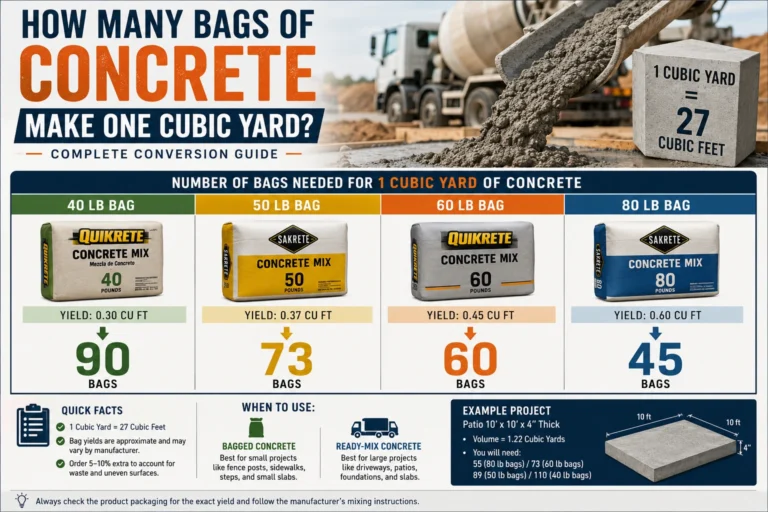
Once you’ve calculated the amount of gravel you need, the next step is estimating delivery. Our guide on How Many Cubic Yards Fit in a Dump Truck? explains typical truck capacities so you can estimate the number of loads required and avoid over-ordering or paying for unnecessary deliveries.
Frequently Asked Questions
What is the most common gravel size?
#57 gravel is the most commonly used size because it works well for driveways, drainage systems, concrete, and many landscaping projects.
Which gravel is best for a driveway?
Most residential driveways use a combination of #3 gravel for the base and #57 gravel for the surface or middle layer.
Is pea gravel good for driveways?
Pea gravel is generally not recommended for driveways because its rounded stones move easily under vehicle tires.
What gravel is best for drainage?
#57 gravel and #67 gravel are both excellent choices because they allow water to flow freely between the stones.
What is crusher run?
Crusher run is a mixture of crushed stone and stone dust that compacts into a firm surface, making it ideal for road bases and driveways.
Does larger gravel drain better?
In general, larger gravel provides better drainage because there is more space between the stones for water to pass through.
Can I mix different gravel sizes?
Yes. Many construction projects combine multiple gravel sizes to improve stability, drainage, and surface appearance.
Conclusion
Choosing the right gravel size can make a significant difference in the performance and lifespan of your project. While decorative landscaping often benefits from smaller gravel like pea gravel or #8 stone, structural applications such as driveways and drainage systems usually require larger aggregate like #57 or #3 gravel.
Understanding the purpose of each gravel size helps you select the right material with confidence and avoid unnecessary costs.
If you’re planning a project, use our Gravel Calculator to estimate the amount of material you’ll need, then check our Gravel Weight Guide to estimate delivery weight before ordering.