Cubic Yard Calculator: Estimate Concrete, Gravel, Soil, and Mulch
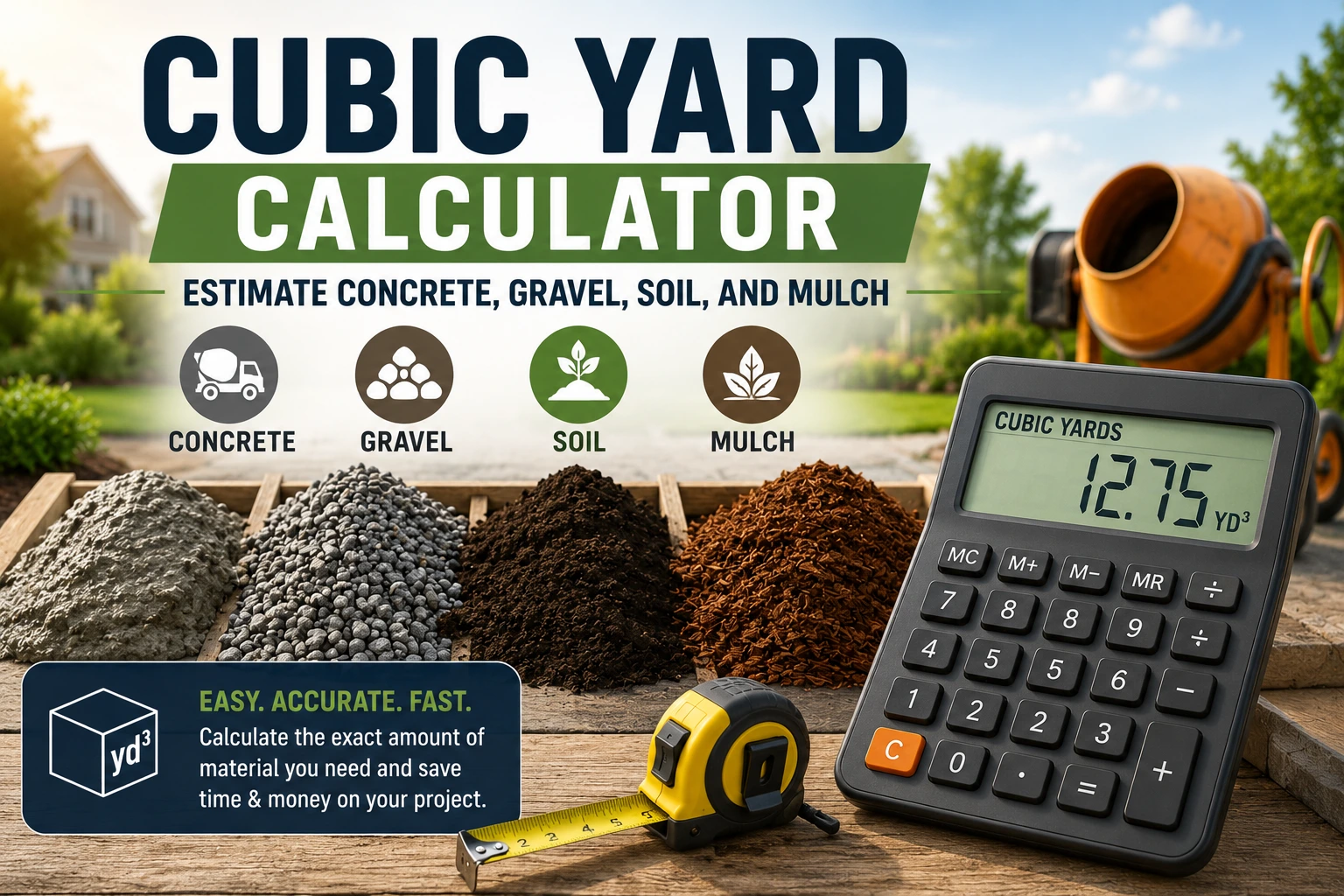
A cubic yard calculator helps you estimate how much material you need for construction, landscaping, gardening, and outdoor projects. Whether you are ordering concrete, gravel, mulch, soil, sand, compost, or fill dirt, this calculator gives you a quick yardage estimate before you buy.
Most bulk materials are sold by the cubic yard, so knowing your project volume can save time, money, and delivery mistakes. You only need to enter the length, width, and depth of your area. The calculator then converts your measurements into cubic yards, so you can order the right amount with more confidence.
What Is a Cubic Yard?
A cubic yard is a unit of volume. It tells you how much space a material will fill, not just how much surface area it will cover. One cubic yard is equal to 27 cubic feet. You can imagine it as a cube that is 3 feet long, 3 feet wide, and 3 feet tall.
This measurement is common in construction and landscaping because materials such as concrete, gravel, topsoil, mulch, compost, sand, and fill dirt are often sold in bulk. Instead of buying by small bags, many homeowners and contractors order these materials by the cubic yard for larger projects.
For example, if you are spreading mulch in a flower bed, you need to know the area and the depth. If you are pouring concrete, you need the length, width, and slab thickness. In both cases, cubic yards help you understand the total volume needed.
How to Use a Cubic Yard Calculator
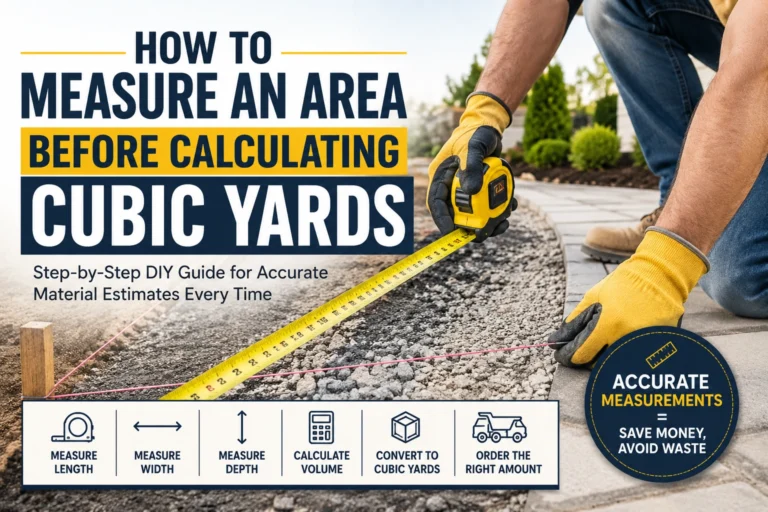
The best way to use a cubic yard calculator is to start with accurate measurements. Measure the length and width of your project area first. Then measure the depth or thickness you want the material to cover.
If your depth is measured in inches, convert it to feet before using the formula. This step is important because many cubic yard formulas use feet as the main unit. For example, 3 inches is not 3 feet. It is 0.25 feet because 3 divided by 12 equals 0.25.
After entering your measurements, the calculator will estimate the total cubic yards. If your result is 2.8 cubic yards, you may order 3 cubic yards depending on the material and project type. For uneven areas, slopes, compacted material, or delivery loss, ordering a little extra is usually a smart choice.
Cubic Yard Formula
The basic cubic yard formula is simple when all measurements are in feet.
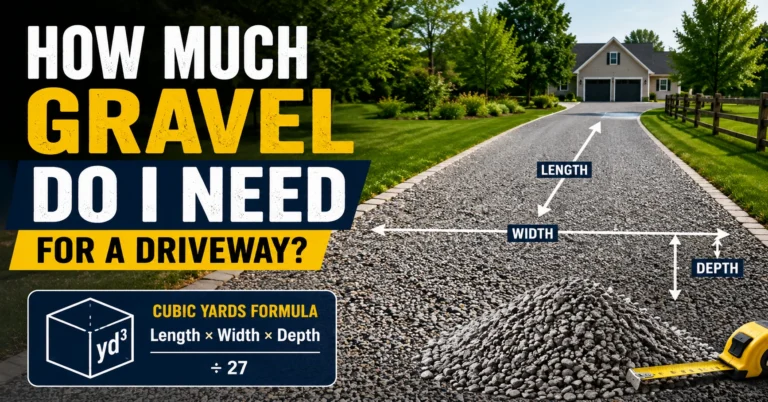
Cubic yards = length × width × depth ÷ 27
This works because one cubic yard contains 27 cubic feet. First, you calculate cubic feet by multiplying length, width, and depth. Then you divide the result by 27 to convert cubic feet into cubic yards.
If your depth is in inches, you can use a slightly different version of the formula.
Cubic yards = length × width × depth in inches ÷ 324
This formula is useful for projects like mulch, gravel, topsoil, and concrete slabs because depth is often measured in inches. For example, a 3-inch mulch layer or a 4-inch concrete slab can be calculated directly with this formula.
If you already know the cubic feet, the conversion is even easier.
Cubic yards = cubic feet ÷ 27
For example, 81 cubic feet divided by 27 equals 3 cubic yards.
Cubic Yard Calculation Example for Concrete
Let’s say you want to pour a concrete slab for a small patio. The slab is 20 feet long, 12 feet wide, and 4 inches thick. Since the thickness is in inches, you first convert it to feet.
4 inches divided by 12 equals 0.33 feet. Now multiply the length, width, and depth.
20 × 12 × 0.33 = 79.2 cubic feet
Now divide the cubic feet by 27.
79.2 ÷ 27 = 2.93 cubic yards
This means you need about 2.93 cubic yards of concrete. In real ordering, this may be rounded to 3 cubic yards. Concrete projects should always be checked carefully because running short during a pour can cause serious problems.
Cubic Yard Calculation Example for Mulch
Now let’s calculate mulch for a landscape bed. Suppose your bed covers 300 square feet and you want to spread mulch 3 inches deep. First, convert the depth into feet.
3 inches divided by 12 equals 0.25 feet. Now multiply the area by the depth.
300 × 0.25 = 75 cubic feet
Then convert cubic feet to cubic yards.
75 ÷ 27 = 2.78 cubic yards
You need about 2.78 cubic yards of mulch. Since mulch settles over time and may spread unevenly, ordering 3 cubic yards would usually be a practical choice.
Cubic Yard Calculation Example for Topsoil
Suppose you want to add topsoil to a lawn area of 500 square feet. You want the topsoil to be 2 inches deep. First, convert 2 inches to feet.
2 inches divided by 12 equals 0.17 feet. Now calculate the cubic feet.
500 × 0.17 = 85 cubic feet
Now divide by 27.
85 ÷ 27 = 3.15 cubic yards
You need about 3.15 cubic yards of topsoil. If the ground is uneven or low in some spots, you may need a little more.
How to Convert Cubic Feet to Cubic Yards
To convert cubic feet to cubic yards, divide the number of cubic feet by 27. This is one of the most useful conversions when working with bagged materials or small project measurements.
For example, if you have 54 cubic feet of material, divide 54 by 27. The answer is 2 cubic yards. If you have 135 cubic feet, divide 135 by 27. The answer is 5 cubic yards.
| Cubic Feet | Cubic Yards | Approx. Cubic Meters |
| 27 | 1 | 0.76 |
| 54 | 2 | 1.53 |
| 81 | 3 | 2.29 |
| 108 | 4 | 3.06 |
| 135 | 5 | 3.82 |
| 270 | 10 | 7.65 |
This table is especially useful when a supplier gives volume in cubic feet but you need to order by cubic yards.
How to Convert Square Feet to Cubic Yards
Square feet measure surface area, while cubic yards measure volume. To convert square feet into cubic yards, you also need the depth of the material.
The formula is:
Square feet × depth in feet ÷ 27 = cubic yards
If the depth is in inches, use this formula:
Square feet × depth in inches ÷ 324 = cubic yards
For example, if your project area is 600 square feet and you want 4 inches of gravel, the calculation would be:
600 × 4 ÷ 324 = 7.41 cubic yards
This means you need about 7.41 cubic yards of gravel. If the area is uneven or the gravel will compact, ordering slightly more may be helpful.
Cubic Yard Coverage by Depth
One cubic yard covers different amounts of surface area depending on how deep you spread the material. A shallow layer covers more area. A deeper layer covers less area.
| Depth | 1 Cubic Yard Covers Approx. |
| 1 inch deep | 324 sq ft |
| 2 inches deep | 162 sq ft |
| 3 inches deep | 108 sq ft |
| 4 inches deep | 81 sq ft |
| 6 inches deep | 54 sq ft |
| 12 inches deep | 27 sq ft |
For example, one cubic yard of mulch spread 3 inches deep covers about 108 square feet. One cubic yard of gravel spread 6 inches deep covers about 54 square feet.
This is why depth is one of the most important numbers in any cubic yard calculation.
Common Materials Measured in Cubic Yards
Concrete is one of the most common materials measured in cubic yards. It is used for slabs, patios, sidewalks, driveways, footings, and foundations. Since concrete hardens quickly, accurate calculation is very important before ordering.
Gravel is also commonly sold by the cubic yard. It is used for driveways, walkways, drainage areas, shed bases, and decorative landscaping. Gravel depth depends on the project. A decorative gravel bed may only need 2 to 3 inches, while a driveway base may need 4 to 6 inches or more.
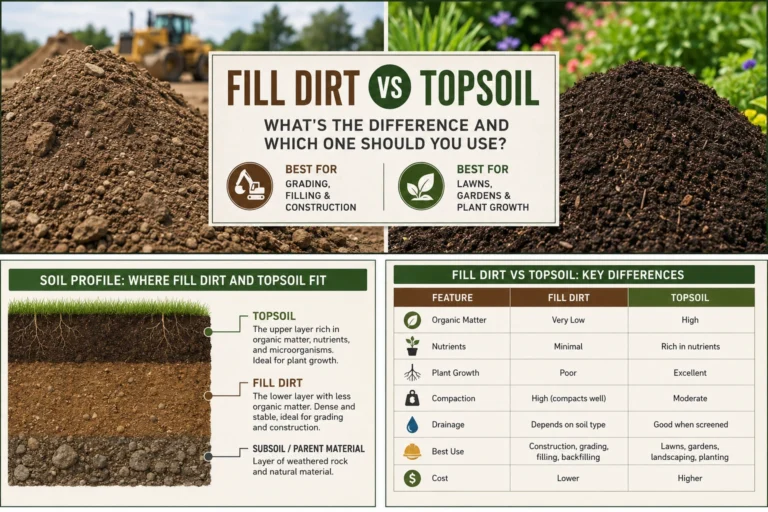
Topsoil and fill dirt are often ordered by the cubic yard for lawns, garden beds, grading, and leveling low spots. Soil can settle after delivery, especially when it is loose or wet. For that reason, a small amount of extra material is often useful.
Mulch is usually used around trees, flower beds, and landscape borders. A 2 to 3 inch layer is common for most mulch projects. Too much mulch around tree trunks can trap moisture, so it should be spread carefully.
Sand is used for pavers, playgrounds, leveling work, and some construction projects. Like soil, sand can compact after spreading. Compost is another common cubic-yard material, especially for gardens and soil improvement.
Recommended Depths for Common Projects
Different projects need different depths. Mulch beds usually need 2 to 3 inches. Decorative gravel often needs 2 to 3 inches. A gravel walkway may need 3 to 4 inches, while a gravel driveway base may need 4 to 6 inches or more.
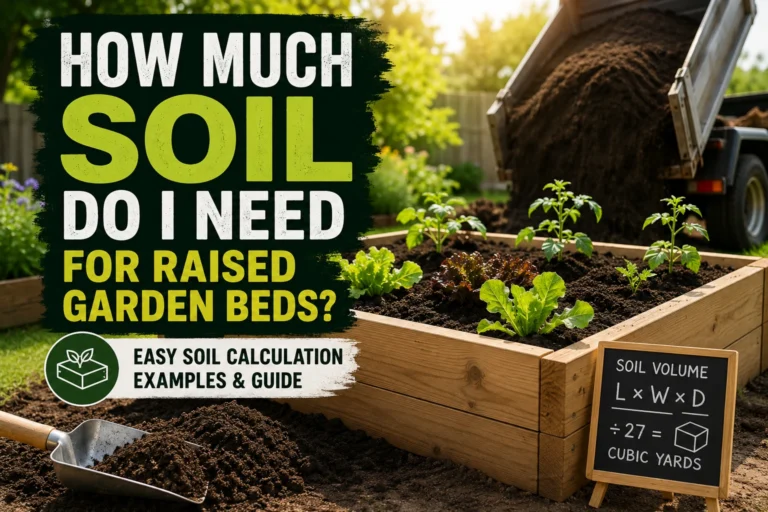
Garden soil is often added at 4 to 8 inches, depending on the planting goal. Compost is usually applied in thinner layers, often 1 to 3 inches. Concrete slabs are commonly 4 inches thick or more, depending on the load and project type.
| Project Type | Recommended Depth |
| Mulch beds | 2–3 inches |
| Decorative gravel | 2–3 inches |
| Gravel walkway | 3–4 inches |
| Gravel driveway base | 4–6 inches |
| Garden soil | 4–8 inches |
| Compost layer | 1–3 inches |
| Concrete slab | 4 inches or more |
These are general estimating ranges. For structural concrete, driveway work, drainage systems, and load-bearing surfaces, it is best to confirm the required depth with a contractor or supplier.
How Much Does a Cubic Yard Weigh?
The weight of a cubic yard depends on the material. A cubic yard of mulch is much lighter than a cubic yard of gravel or concrete. Moisture also changes the weight. Wet soil, wet sand, and wet gravel can weigh much more than dry material.
| Material | Approx. Weight per Cubic Yard |
| Mulch | 400–800 lb |
| Compost | 1,000–1,600 lb |
| Topsoil | 1,800–2,700 lb |
| Sand | 2,400–3,000 lb |
| Gravel | 2,400–3,000 lb |
| Concrete | About 4,000 lb |
This matters when planning delivery or pickup. A full cubic yard of gravel or sand may be too heavy for a small pickup truck. Always check your vehicle’s payload limit before hauling bulk material yourself.
How Many Cubic Yards Are in a Ton?
A ton measures weight, while a cubic yard measures volume. That means there is no single fixed answer for how many cubic yards are in a ton. The answer depends on the density of the material.
A ton of gravel may equal around 0.6 to 0.75 cubic yards. A ton of sand may be similar. A ton of topsoil may be around 0.7 to 1.1 cubic yards, depending on moisture and density. A ton of mulch can cover much more volume because mulch is lighter.
If a supplier sells by the ton and your calculator gives cubic yards, ask the supplier for the material’s weight per cubic yard. This will give you a more accurate conversion.
Should You Order Extra Material?
In most projects, it is smart to order slightly more material than the exact calculator result. Measurements are not always perfect. Ground may be uneven. Material may settle, compact, spill, or spread thicker than expected.
For small and simple projects, 5% extra is often enough. For mulch, soil, and gravel, 5% to 10% extra is usually a safe range. For sloped or irregular areas, 10% to 15% extra may be better.
Concrete is different because shortages are harder to fix. If you are ordering concrete, double-check every measurement and confirm the final quantity with your contractor or ready-mix supplier before placing the order.
Cubic Yard Calculator for Cost Estimation
A cubic yard calculator can also help estimate material cost. Once you know the number of cubic yards, multiply it by the price per cubic yard.
The formula is:
Total cost = cubic yards × price per cubic yard
For example, if you need 6 cubic yards of gravel and the price is $45 per cubic yard, your estimated material cost is:
6 × 45 = $270
This estimate only covers the material price. Your final cost may also include delivery fees, taxes, fuel charges, minimum order fees, equipment rental, and labor.
Shape-Based Cubic Yard Calculations
Most cubic yard calculations are based on rectangular or square areas. The formula for these areas is length multiplied by width multiplied by depth, then divided by 27.
For circular areas, calculate the area of the circle first. Use 3.14 multiplied by radius multiplied by radius. Then multiply by depth and divide by 27.
For triangular areas, multiply base by height, divide by 2, then multiply by depth and divide by 27. For trapezoid areas, use the average width multiplied by length, then multiply by depth and divide by 27.
For border areas, calculate the outer area first. Then calculate the inner area. Subtract the inner area from the outer area, then multiply by depth and divide by 27.
Cubic Yards vs Cubic Feet vs Square Feet
Cubic yards, cubic feet, and square feet are often confused, but they do not mean the same thing. Square feet measure area. Cubic feet and cubic yards measure volume.
Square feet are useful when measuring a surface, such as a lawn, floor, patio, or garden bed. Cubic feet are often used for smaller material quantities, such as bagged mulch or soil. Cubic yards are used for bulk material delivery.
| Term | Measures | Common Use |
| Square feet | Area | Lawns, floors, surfaces |
| Cubic feet | Volume | Bagged soil, mulch, small materials |
| Cubic yards | Volume | Bulk concrete, gravel, soil, mulch |
| Square yards | Area | Turf, carpet, fabric |
If a project has depth, you need a volume measurement. That is why cubic yards are used for material estimates.
Common Mistakes When Calculating Cubic Yards
One common mistake is forgetting to convert inches to feet. If your depth is 3 inches, it should be entered as 0.25 feet, not 3 feet. This mistake can make your estimate far too high.
Another mistake is using the wrong depth. A 4-inch layer needs twice as much material as a 2-inch layer. Always check the correct depth for your project before ordering.
Some people also forget to add extra material. This can lead to shortages, especially when the ground is uneven or the material compacts after spreading.
Another issue is confusing square feet with cubic yards. Square feet only measure surface area. To calculate cubic yards, you must also include depth.
FAQs About Cubic Yard Calculator
What is a cubic yard calculator?
A cubic yard calculator is a tool that estimates volume in cubic yards. It helps you calculate how much concrete, gravel, soil, mulch, sand, compost, or fill dirt you need for a project.
How do I calculate cubic yards?
To calculate cubic yards, multiply length by width by depth in feet. Then divide the answer by 27. The formula is length × width × depth ÷ 27
How many cubic feet are in one cubic yard?
There are 27 cubic feet in one cubic yard. This is because a cubic yard is 3 feet long, 3 feet wide, and 3 feet tall.
How do I convert cubic feet to cubic yards?
To convert cubic feet to cubic yards, divide cubic feet by 27. For example, 81 cubic feet divided by 27 equals 3 cubic yards.
How do I convert square feet to cubic yards?
To convert square feet to cubic yards, multiply the square feet by the depth in feet, then divide by 27. If the depth is in inches, multiply square feet by depth in inches and divide by 324.
How much does one cubic yard cover?
One cubic yard covers about 324 square feet at 1 inch deep, 162 square feet at 2 inches deep, 108 square feet at 3 inches deep, and 54 square feet at 6 inches deep.
Can I use this cubic yard calculator for concrete?
Yes, you can use a cubic yard calculator for concrete slabs, patios, sidewalks, driveways, and footings. For concrete, always double-check your measurements before ordering.
Can I use this cubic yard calculator for mulch?
Yes, you can use it for mulch. Enter the area and desired mulch depth to estimate how many cubic yards you need.
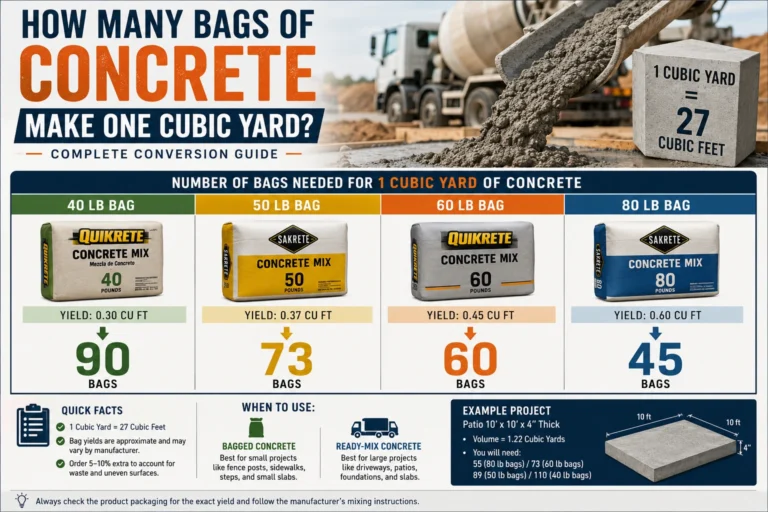
How many bags are in a cubic yard?
It depends on the bag size. If one bag contains 2 cubic feet, then one cubic yard needs about 13.5 bags. In most cases, you would round up to 14 bags.
How much does a cubic yard of concrete weigh?
A cubic yard of normal-weight concrete is often estimated at about 4,000 pounds. The exact weight can vary depending on the mix.
Should I order extra material?
Yes, ordering extra material is usually a good idea. For most projects, 5% to 10% extra helps cover uneven ground, settling, compaction, and small measurement errors.
How many cubic yards are in a ton?
There is no fixed answer because a ton measures weight and a cubic yard measures volume. The answer depends on the material. Gravel, sand, soil, and mulch all have different densities.
Final Thoughts
A cubic yard calculator makes material planning easier and more accurate. Instead of guessing how much concrete, gravel, soil, mulch, sand, or compost you need, you can calculate the volume based on your project size and depth.
For the best result, measure carefully, convert inches to feet correctly, and add a small amount of extra material before ordering. This helps reduce shortages, delivery issues, and wasted money.
Use the calculator above to estimate your cubic yards and plan your next project with confidence.