How Much Gravel Do I Need for a Driveway? Calculator & Coverage Guide
If you’re planning a new driveway or refreshing an existing one, one of the first questions you’ll probably ask is how much gravel do I need for a driveway? Getting the answer right is important because ordering too little gravel can delay your project, while ordering too much can unnecessarily increase costs.
Gravel driveways remain one of the most affordable and durable driveway options available. They provide excellent drainage, require less maintenance than many paved surfaces, and can last for years when installed correctly. However, before ordering material, you need to know exactly how much gravel your project requires.
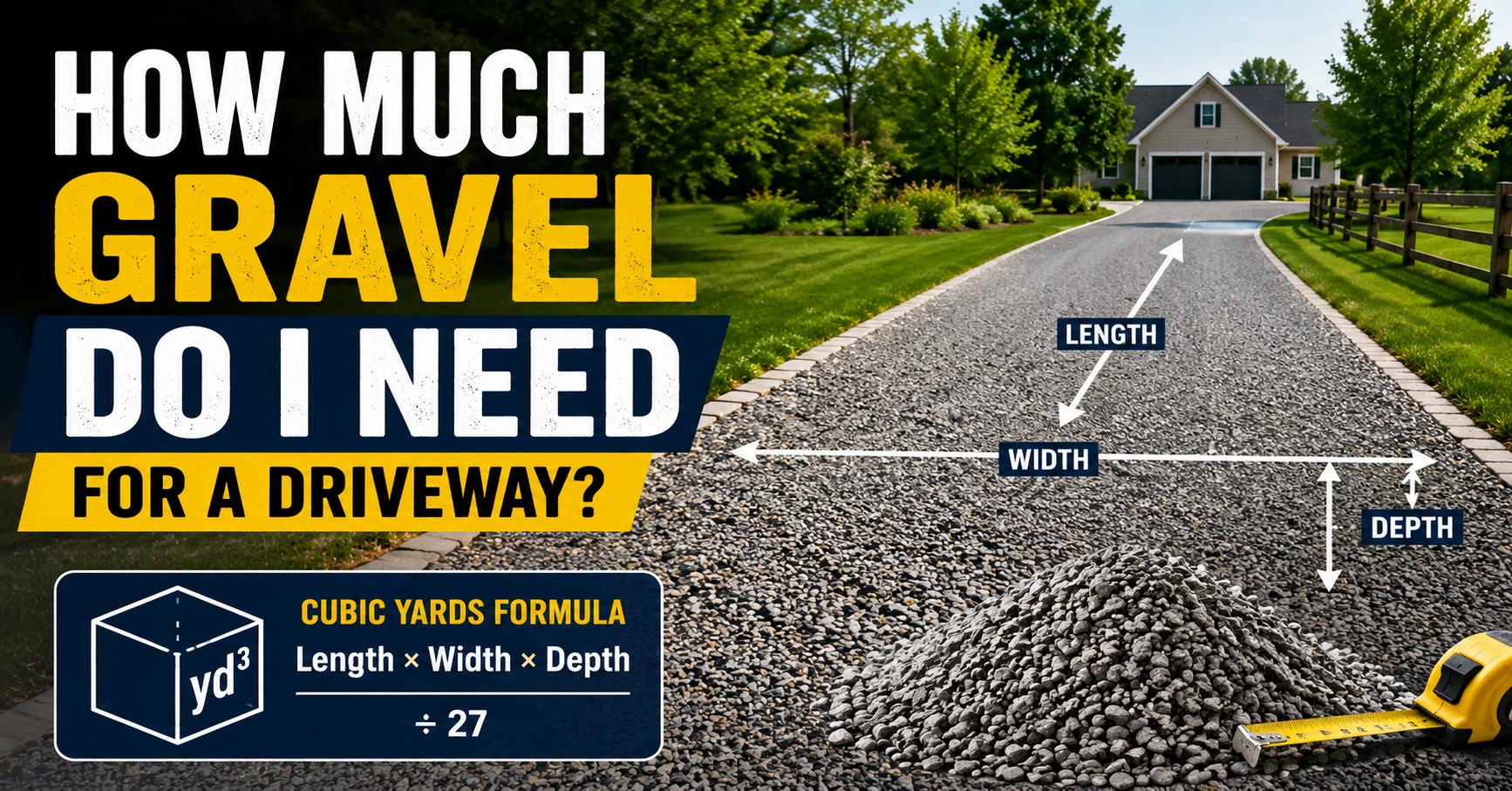
The amount of gravel needed depends on three main factors: the length of the driveway, the width of the driveway, and the depth of gravel you plan to install. Once these measurements are known, calculating the required volume becomes straightforward.
This guide explains everything you need to know, including gravel calculation formulas, recommended driveway depths, coverage charts, weight estimates, and real-world examples to help you order the correct amount of material.
Why Accurate Gravel Estimation Is Important
Many homeowners assume that estimating gravel is simply a matter of measuring the driveway’s surface area. In reality, gravel is sold by volume, which means depth must also be considered.
A driveway that is 50 feet long and 12 feet wide may require significantly different amounts of gravel depending on whether the material is installed at a depth of 2 inches, 4 inches, or 6 inches.
Accurate calculations help you:
- Avoid paying for extra deliveries
- Prevent material shortages during installation
- Stay within budget
- Improve driveway performance and durability
- Ensure proper drainage
Taking a few minutes to calculate gravel requirements can save both time and money later.
Understanding How Gravel Is Measured
Gravel suppliers typically sell material in one of two ways:
By Cubic Yard
A cubic yard is the most common unit used when ordering gravel.
One cubic yard equals:
- 27 cubic feet
- Approximately 0.76 cubic meters
Most landscaping suppliers, quarries, and construction material yards quote gravel prices per cubic yard.
By Ton
Some suppliers sell gravel by weight rather than volume.
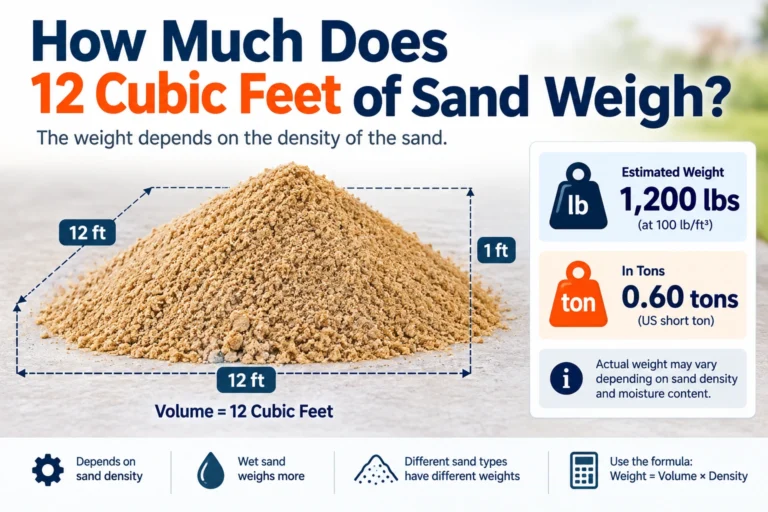
The weight of gravel varies depending on the type and moisture content, but a general estimate is:
| Material | Average Weight Per Cubic Yard |
| Pea Gravel | 2,400–2,700 lbs |
| Crushed Stone | 2,600–3,000 lbs |
| River Rock | 2,500–2,900 lbs |
| Road Base Gravel | 2,700–3,200 lbs |
Because weight varies, it is usually best to calculate volume first and then convert to tons if necessary.
How to Calculate Gravel for a Driveway
The standard formula used by contractors and landscapers is:
Cubic Yards = (Length × Width × Depth) ÷ 27
Where:
- Length is measured in feet
- Width is measured in feet
- Depth is measured in feet
The number 27 is used because one cubic yard contains 27 cubic feet.
Converting Inches to Feet
Most driveway depths are measured in inches, but the formula requires feet.
Use these conversions:
| Inches | Feet |
| 1 inch | 0.083 ft |
| 2 inches | 0.167 ft |
| 3 inches | 0.25 ft |
| 4 inches | 0.333 ft |
| 5 inches | 0.417 ft |
| 6 inches | 0.5 ft |
Converting depth correctly is one of the most important parts of the calculation process.
Example Gravel Driveway Calculation
Let’s calculate the gravel needed for a typical residential driveway.
Driveway Dimensions
Length: 50 feet
Width: 12 feet
Depth: 4 inches
Step 1: Convert Depth
4 inches ÷ 12 = 0.333 feet
Step 2: Calculate Cubic Feet
50 × 12 × 0.333 = 199.8 cubic feet
Step 3: Convert to Cubic Yards
199.8 ÷ 27 = 7.4 cubic yards
For this project, you would need approximately 7.5 cubic yards of gravel.
Most contractors recommend rounding up slightly to account for compaction and minor measurement errors.
Recommended Gravel Depth for Driveways
The ideal gravel depth depends on whether you’re building a new driveway or adding gravel to an existing surface.
Existing Gravel Driveway
If you’re simply refreshing an existing gravel driveway, a layer of 2 to 4 inches is usually sufficient.
This approach helps restore the surface without requiring a complete rebuild.
New Gravel Driveway
A brand-new gravel driveway typically requires multiple layers.
The base layer provides stability, the middle layer improves load distribution, and the top layer creates a smooth driving surface.
A typical installation may include:
| Layer | Recommended Depth |
| Base Layer | 4–6 inches |
| Middle Layer | 3–4 inches |
| Top Layer | 2–3 inches |
Total depth often ranges between 8 and 12 inches.
The exact depth depends on soil conditions, drainage requirements, and expected traffic.
Gravel Coverage Chart
Many homeowners prefer using a coverage chart for quick estimates.
The following chart shows approximately how much area one cubic yard of gravel covers at different depths.
| Depth | Coverage Per Cubic Yard |
| 1 inch | 324 sq ft |
| 2 inches | 162 sq ft |
| 3 inches | 108 sq ft |
| 4 inches | 81 sq ft |
| 5 inches | 65 sq ft |
| 6 inches | 54 sq ft |
This chart can be useful when estimating material for smaller driveway projects.
Common Driveway Sizes and Gravel Requirements
While every project is different, these examples provide a useful starting point.
Single-Car Driveway
Typical dimensions:
10 ft × 20 ft
At a depth of 4 inches, the driveway requires approximately:
2.5 cubic yards of gravel
Most homeowners order 3 cubic yards to allow for compaction and waste.
Two-Car Driveway
Typical dimensions:
20 ft × 24 ft
At a depth of 4 inches, the driveway requires approximately:
6 cubic yards of gravel
Long Rural Driveway
Typical dimensions:
12 ft × 100 ft
At a depth of 4 inches, the driveway requires approximately:
15 cubic yards of gravel
This type of project often requires delivery by dump truck.
How Many Tons of Gravel Do I Need?
If your supplier sells gravel by weight, you will need to convert cubic yards to tons.
commonly used estimate is:
1 cubic yard of gravel = approximately 1.5 tons
For example:
8 cubic yards × 1.5 = 12 tons
Because gravel density varies, always verify conversion rates with your supplier before ordering.
Choosing the Right Gravel for a Driveway
Not all gravel performs the same way.
Selecting the right material can improve durability and reduce maintenance requirements.
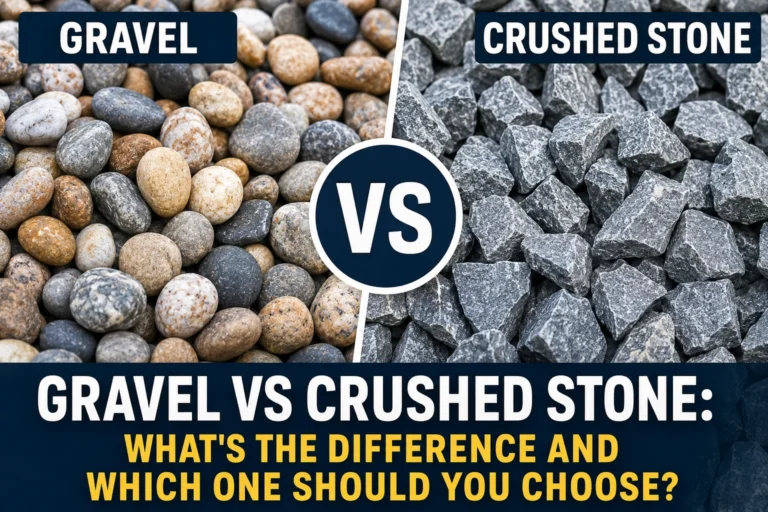
Crushed Stone
Crushed stone is one of the most popular driveway materials because it compacts well and creates a stable surface.
It is suitable for both residential and commercial driveways.
Crusher Run
Crusher run contains stone dust and small aggregate particles.
The material locks together tightly and provides excellent stability.
Many contractors use crusher run as a base layer.
Pea Gravel
Pea gravel offers a decorative appearance but may shift under vehicle traffic.
It is generally better suited for walkways and landscaping applications.
River Rock
River rock provides an attractive natural appearance but does not compact as effectively as crushed stone.
It is often used for decorative purposes rather than primary driving surfaces.
Common Gravel Estimation Mistakes
Even simple driveway projects can be affected by calculation errors.
One of the most common mistakes is forgetting to convert inches into feet before using the volume formula. This can dramatically increase or decrease the estimated amount of gravel.
Another frequent mistake is ordering the exact calculated amount without accounting for compaction. Gravel settles over time, particularly after heavy rainfall and vehicle traffic.
Some homeowners also fail to measure the driveway accurately. Measuring at multiple points can help account for irregular shapes and width variations.
Should You Order Extra Gravel?
Most contractors recommend ordering slightly more gravel than the exact calculated amount.
A good rule is to add:
5% to 10% extra material
This extra amount helps compensate for:
- Compaction
- Uneven ground
- Measurement errors
- Future maintenance needs
For example, if your calculation shows 10 cubic yards, ordering 11 cubic yards is often a smart decision.
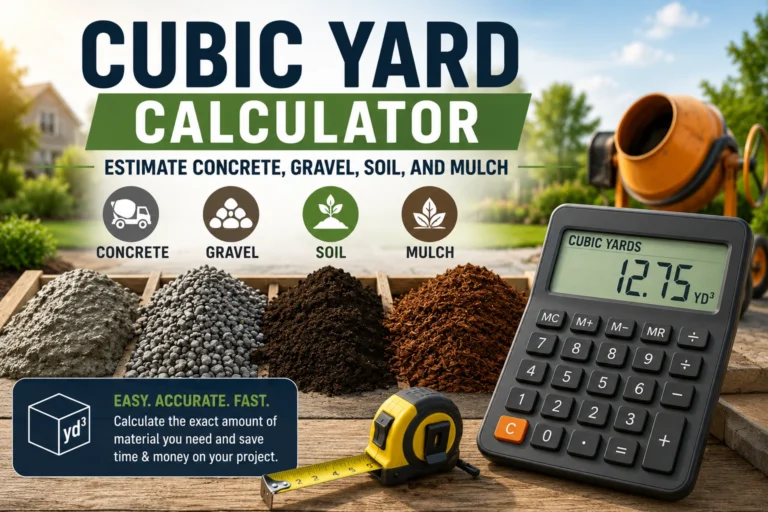
Using a Gravel Calculator for Faster Results
While manual calculations are useful, an online calculator can make the process much faster.
A gravel calculator can instantly determine:
- Cubic yards required
- Estimated tons
- Material weight
- Coverage area
- Cost estimates
For the most accurate results, enter your driveway dimensions into our Gravel Cubic Yard Calculator and receive an instant estimate.
Frequently Asked Questions
How much gravel do I need for a 100-foot driveway?
A 12-foot-wide driveway that is 100 feet long and 4 inches deep typically requires about 15 cubic yards of gravel.
What is the best gravel depth for a driveway?
Most driveways perform best with a gravel depth between 4 and 12 inches, depending on traffic and soil conditions.
How many cubic yards of gravel fit in a dump truck?
A standard dump truck usually carries between 10 and 14 cubic yards of gravel, although capacity varies by vehicle.
How much does a cubic yard of gravel weigh?
Most gravel weighs between 2,400 and 3,000 pounds per cubic yard depending on the material type.
Should I order extra gravel?
Yes. Ordering 5–10% extra is recommended to account for compaction, uneven surfaces, and minor measurement errors.
Final Thoughts
Determining how much gravel you need for a driveway is easier than many homeowners expect. Once you know the driveway’s length, width, and desired depth, a simple volume calculation can provide an accurate estimate in cubic yards.
Taking the time to measure carefully, choose the right gravel type, and order slightly more material than required can help ensure a smoother installation process and a longer-lasting driveway. Whether you’re building a small residential driveway or a long rural access road, accurate calculations are the foundation of a successful project.