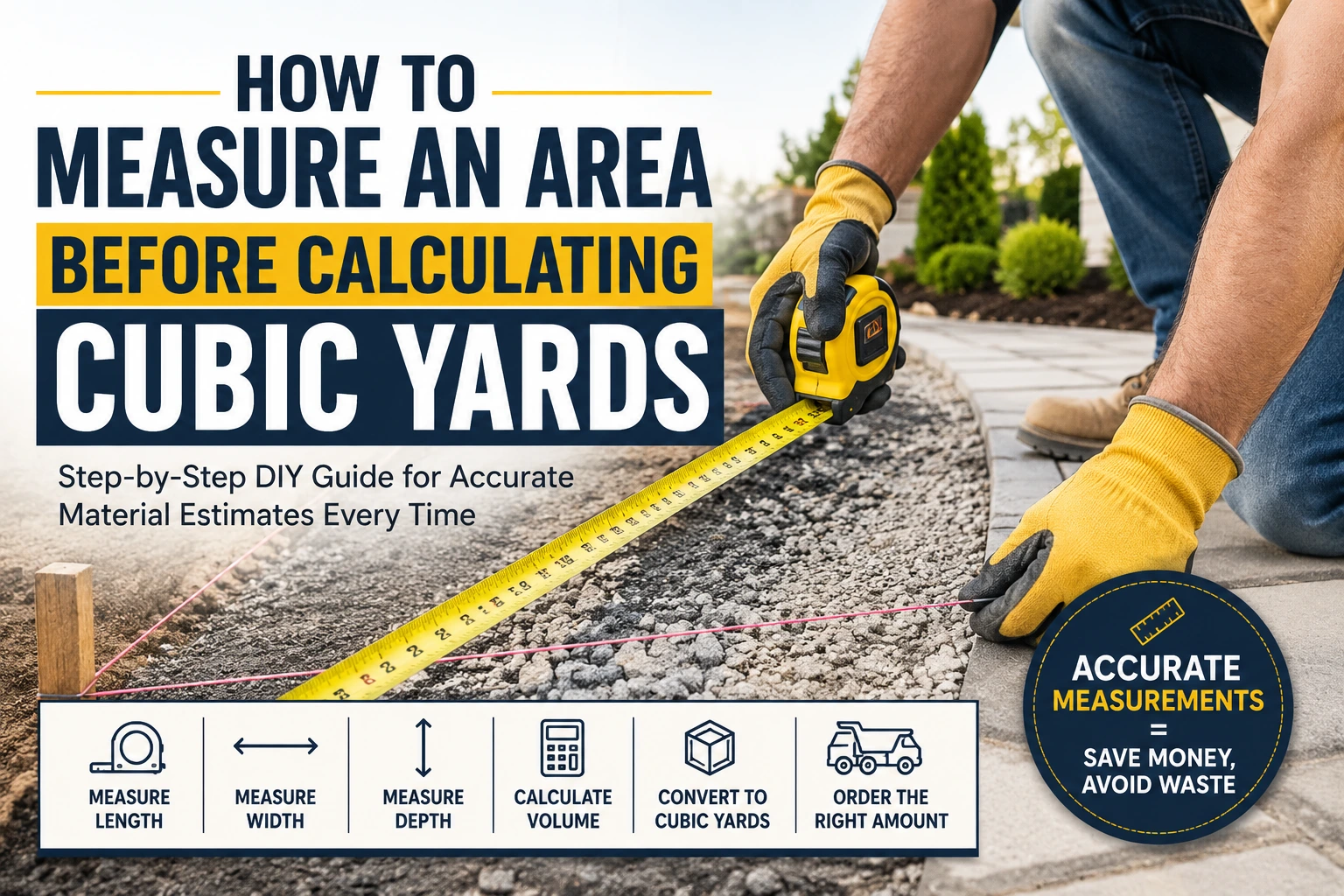
How to Measure an Area Before Calculating Cubic Yards
Ordering too much material can waste hundreds of dollars, while ordering too little can delay your project and increase delivery costs. The good news is that most measurement mistakes are easy to avoid if you know the correct process.
Before using any cubic yard calculator, you first need accurate measurements of your project area. Whether you’re installing a concrete slab, building a gravel driveway, spreading mulch, or filling a raised garden bed with soil, taking the right measurements is the foundation of an accurate material estimate.
In this guide, you’ll learn how to measure different shapes—including rectangles, squares, circles, triangles, and irregular areas—so you can calculate cubic yards with confidence. We’ll also cover common mistakes to avoid and practical tips that professionals use to improve accuracy.
Pro Tip: After measuring your project, use our Cubic Yard Calculator to quickly calculate how many cubic yards of concrete, gravel, soil, sand, or mulch you’ll need.
Table of Contents
- Why Accurate Measurements Matter
- Tools You’ll Need
- Understanding the Three Basic Measurements
- How to Measure a Rectangle or Square
- How to Measure a Circle
- How to Measure a Triangle
- Measuring Irregular Shapes
- Measuring Sloped Areas
- Measuring Common Outdoor Projects
- Common Measurement Mistakes
- Frequently Asked Questions
Why Accurate Measurements Matter
Every cubic yard calculation begins with accurate field measurements. Even a small measuring error can significantly affect the amount of material you order.
For example, if a driveway is measured just one foot wider than its actual size, the final estimate may include more gravel than necessary. On large projects, this can result in unnecessary material costs and additional delivery charges.
On the other hand, underestimating your measurements may leave you short of material, forcing you to place a second order and potentially delaying your project.
Taking a few extra minutes to measure carefully can help you:
- Save money on materials
- Reduce waste
- Avoid project delays
- Improve calculation accuracy
- Order the correct amount the first time
Professional contractors spend considerable time measuring before ordering materials because they know that accurate estimates start with reliable dimensions.
Tools You’ll Need
You don’t need expensive equipment to measure most residential projects. In many cases, a few basic tools are enough.
Essential Measuring Tools
- Tape measure (25–100 ft)
- Measuring wheel (ideal for large areas)
- Wooden stakes
- String line
- Marker or spray paint
- Notebook or mobile phone for recording measurements
- Calculator
For larger driveways, parking areas, or landscaping projects, a measuring wheel can make the process faster and more accurate than using a standard tape measure.
Understanding the Three Basic Measurements
Before calculating cubic yards, you need three measurements:
- Length
- Width
- Depth
These dimensions determine the total volume of material required.
Length
Measure the longest side of the project from one end to the other.
Width
Measure the distance across the project at its widest point.
Depth
Depth refers to how thick the material will be after installation.
For example:
- Gravel driveway: 4–6 inches
- Concrete patio: 4 inches
- Mulch: 2–4 inches
- Topsoil: 3–6 inches
Important: If your depth is measured in inches, convert it to feet before calculating volume. For example, 4 inches = 0.33 feet and 6 inches = 0.5 feet.
How to Measure a Rectangle or Square
Most outdoor projects, such as patios, driveways, concrete slabs, and garden beds, are rectangular or square. These are the easiest shapes to measure.
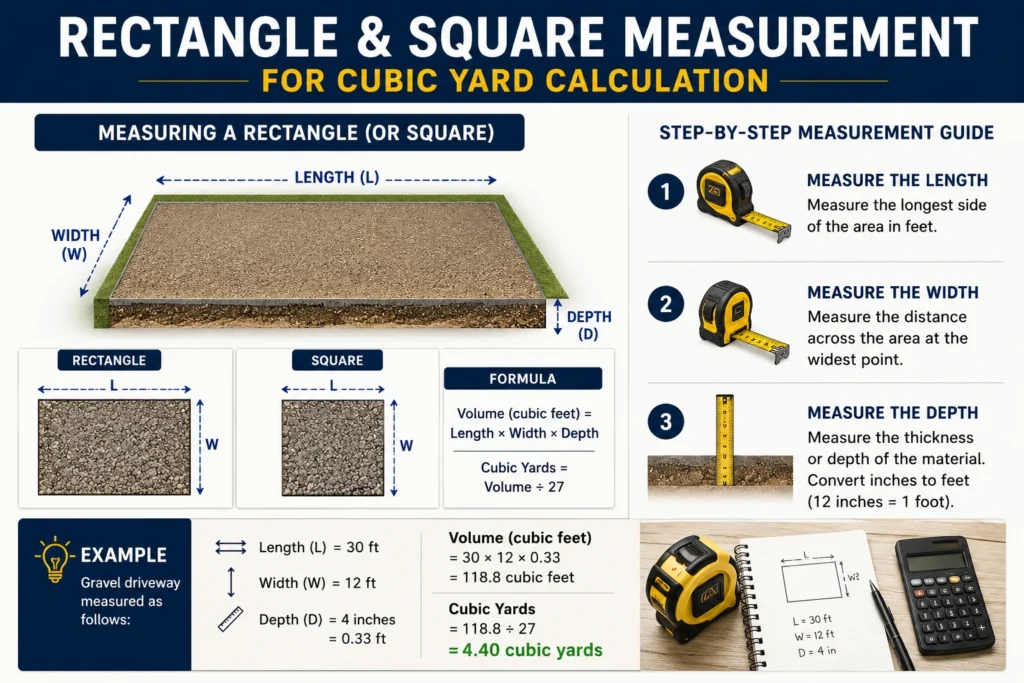
Step 1: Measure the Length
Use a tape measure to determine the distance from one end of the project to the other.
Step 2: Measure the Width
Measure the distance across the area at its widest point.
Step 3: Measure the Depth
Decide how deep the material needs to be. If the depth is in inches, convert it to feet before using it in calculations.
Example
Imagine you’re installing a gravel driveway with these dimensions:
- Length: 30 feet
- Width: 12 feet
- Depth: 4 inches (0.33 feet)
You’ll use these measurements in your cubic yard calculation to estimate the amount of gravel required.
Tip: Always measure each side twice. Small measurement errors can become expensive when ordering several cubic yards of material.
Measurement Tips for Better Accuracy
Professional contractors follow a few simple habits to improve measurement accuracy:
- Measure each dimension at least twice.
- Record measurements immediately to avoid forgetting them.
- Use consistent units throughout the project.
- Round measurements only after completing all calculations.
- Remove obstacles such as garden hoses or loose materials before measuring.
- For very large areas, divide the project into smaller sections rather than trying to measure everything at once.
These simple practices can make your estimates much more reliable and reduce the chance of ordering too much or too little material.
Expert Tip
If your project isn’t a perfect rectangle or square, don’t guess the dimensions. Instead, divide the area into smaller, simple shapes such as rectangles or triangles. Measure each section separately and combine the results later. This approach is far more accurate and is commonly used by contractors for irregular landscaping projects.
How to Measure a Circle
Circular areas are common in landscaping projects such as flower beds, fire pits, fountains, and round patios. Measuring them is simple once you know the correct method.
Instead of measuring the length and width, you’ll measure the diameter, which is the distance from one side of the circle to the other through its centre.
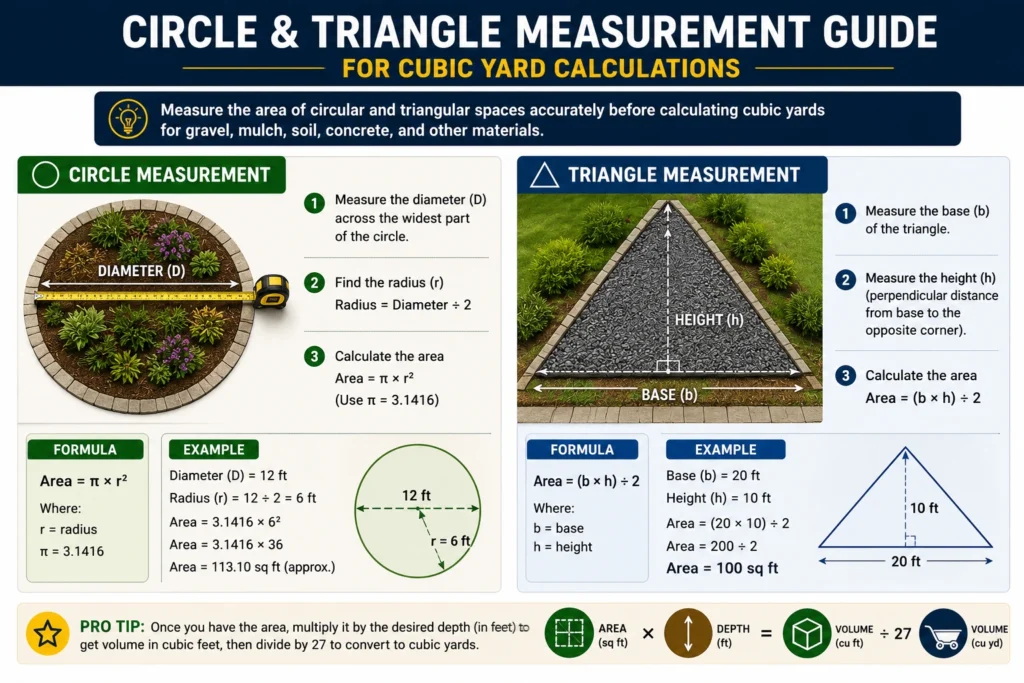
Step 1: Measure the Diameter
Stretch your tape measure across the widest part of the circle.
Example:
Diameter = 12 feet
Step 2: Find the Radius
The radius is half of the diameter.
Radius = Diameter ÷ 2
Example:
12 ÷ 2 = 6 feet
Step 3: Calculate the Area
Use this formula:
Area = π × Radius²
Example:
3.1416 × 6 × 6
= 113 square feet (approximately)
Once you’ve calculated the area, simply multiply it by the desired material depth to determine the total volume before converting it into cubic yards.
Helpful Tip: If you’re installing gravel, mulch, or soil in a circular landscape bed, measuring the diameter accurately is the most important step.
How to Measure a Triangle
Triangular areas are commonly found around driveways, sidewalks, landscape borders, and corner sections of yards.
Unlike rectangles, triangles require only two measurements:
- Base
- Height
Step 1: Measure the Base
Measure the longest side of the triangle.
Example:
Base = 20 feet
Step 2: Measure the Height
Measure the perpendicular distance from the base to the opposite corner.
Example:
Height = 10 feet
Step 3: Calculate the Area
Use this formula:
Area = (Base × Height) ÷ 2
Example:
20 × 10 = 200
200 ÷ 2 = 100 square feet
Now multiply the area by your required depth before converting to cubic yards.
How to Measure Irregular Shapes
Most outdoor projects aren’t perfect rectangles or circles.
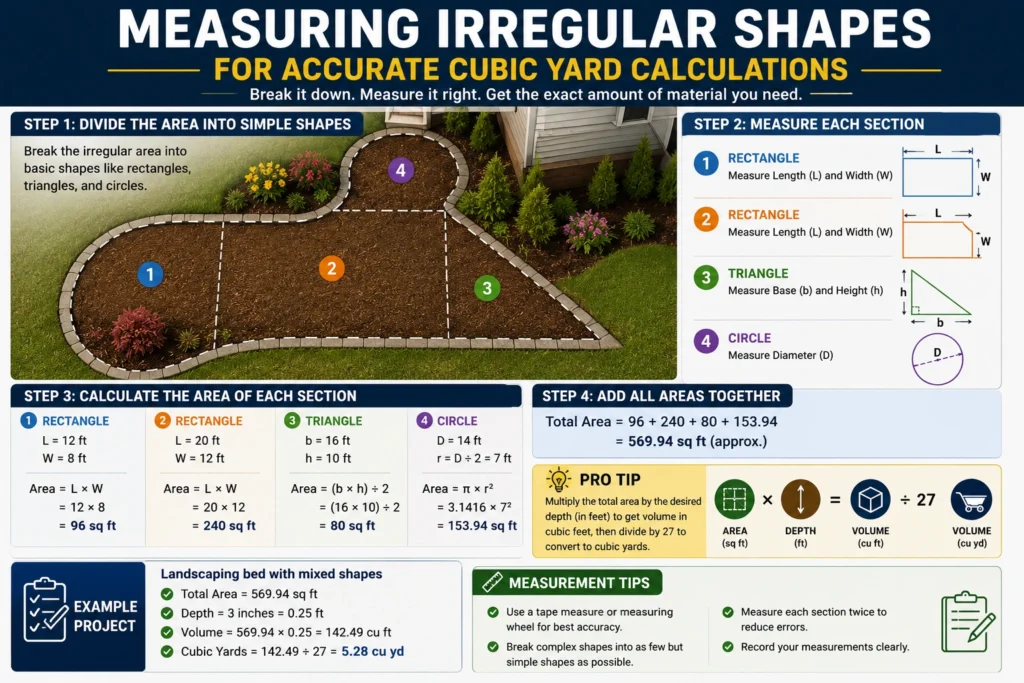
Examples include:
- Curved garden beds
- Winding pathways
- Landscaped islands
- Uneven lawns
- Decorative planting areas
Many homeowners try to estimate these areas by eye, but that often leads to inaccurate material estimates.
The easiest approach is to divide the project into several simple shapes.
For example:
- Rectangle
- Triangle
- Circle
- Square
Measure each section separately, calculate the area for each one, and then add the totals together.
This method produces far more accurate results than trying to estimate the entire area at once.
Example
Imagine a front yard landscape with:
- One rectangular section
- One circular flower bed
- One triangular corner
Measure each section individually.
Then combine all three areas before calculating the required cubic yards.
This is the same method used by professional landscapers and contractors on complex residential projects.
Measuring Sloped Areas
Sloped ground can make measuring more challenging because the surface distance is longer than the horizontal distance.
For landscaping projects, it’s generally best to measure the horizontal length and width rather than following the slope with a tape measure.
This provides a more accurate estimate of the material needed.
If the slope changes significantly, divide it into multiple smaller sections and measure each section separately.
For steep hillsides, professional contractors may use laser measuring tools, but most residential projects can be measured accurately using a standard tape measure and stakes.
How to Measure a Gravel Driveway
Driveways are one of the most common projects requiring cubic yard calculations.
Start by measuring:
- Total length
- Average width
- Desired gravel depth
If the driveway changes width, divide it into multiple sections.
For example:
Section 1:
- 40 ft × 12 ft
Section 2:
- 20 ft × 10 ft
Calculate each section separately before adding the totals together.
This method is much more accurate than estimating an average width for the entire driveway.
Planning a new driveway? After taking your measurements, use our Gravel Calculator to estimate exactly how much gravel you’ll need.
How to Measure a Concrete Slab
Concrete slabs are usually rectangular, making them among the easiest projects to measure.
Measure:
- Length
- Width
- Thickness
Most residential slabs are approximately 4 inches thick, although garages, workshops, and driveways often require greater thickness depending on local building requirements.
Measure carefully before ordering concrete because changes after delivery can be expensive.
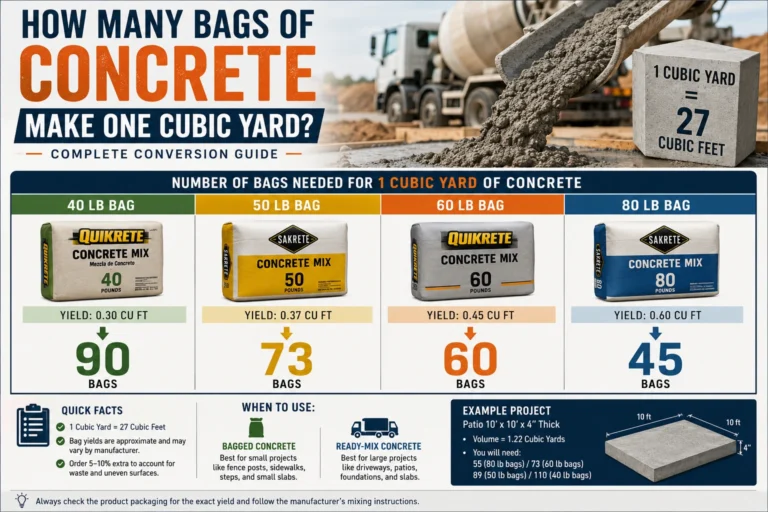
Need to estimate concrete? Use our Concrete Calculator to calculate the required volume in cubic yards.
How to Measure a Raised Garden Bed
Raised beds are normally rectangular or square.
Measure:
- Inside length
- Inside width
- Soil depth
Always measure from the inside edges because that’s where the soil will actually be placed.
If your raised bed has an unusual shape, divide it into smaller rectangles before calculating the total area.
Growing vegetables or flowers? Our Soil Calculator can help estimate the amount of soil required based on your measurements.
How to Measure a Mulch Bed
Landscape mulch is often installed around trees, shrubs, flower beds, and walkways.
Because these areas usually have curved edges, divide them into simple shapes whenever possible.
For tree rings, measure the diameter.
For long planting beds, measure several widths and calculate an average width.
This method produces more accurate results than estimating by eye.
Installing landscape mulch? Use our Mulch Calculator after measuring your beds to estimate the correct amount of material.
Pro Tips for Accurate Measurements
Professionals follow these simple practices to improve measurement accuracy:
- Measure on a dry day whenever possible.
- Use wooden stakes and string to outline the project before measuring.
- Record every measurement immediately.
- Double-check unusual dimensions before ordering materials.
- Measure depth in several locations if the ground is uneven.
- Add a small allowance (around 5–10%) for waste, settling, or compaction when appropriate.
These habits help reduce errors and make it easier to order the correct amount of material the first time.
Common Measurement Mistakes to Avoid
Even a small measuring mistake can lead to ordering too much or too little material. Before using a cubic yard calculator, take a few minutes to review these common errors.
Measuring in Different Units
One of the biggest mistakes is mixing feet and inches in the same calculation.
For example:
- Length = Feet
- Width = Feet
- Depth = Inches
Before calculating volume, always convert the depth into feet. Using consistent units helps ensure an accurate result.
Guessing Measurements
Never estimate the size of your project by eye.
A flower bed that looks 10 feet long may actually measure 12 feet, which can significantly affect the total amount of material needed.
Always use a tape measure or measuring wheel instead of guessing.
Forgetting About Curves
Curved edges are common in landscaping, but many homeowners measure only the longest and widest points.
Instead, divide curved areas into smaller rectangles, circles, or triangles for a more accurate estimate.
Ignoring Uneven Ground
If the project area has low or high spots, measure the depth in several locations and calculate the average depth.
This provides a much more realistic estimate than measuring at only one point.
Ordering the Exact Amount
Materials such as gravel, mulch, and soil may settle during installation, while some waste is normal when spreading or leveling.
For most residential projects, ordering 5–10% extra material is a practical way to avoid running short.
What to Do After Measuring
Once you’ve recorded your project dimensions, the next step is calculating the required volume.
The basic process is:
- Measure the length.
- Measure the width.
- Measure the depth.
- Convert the depth from inches to feet if necessary.
- Calculate the volume.
- Convert the result to cubic yards.
Instead of performing these calculations manually, you can use our Cubic Yard Calculator to get an accurate estimate in seconds.
If you’re working with a specific material, you can also use our dedicated calculators:
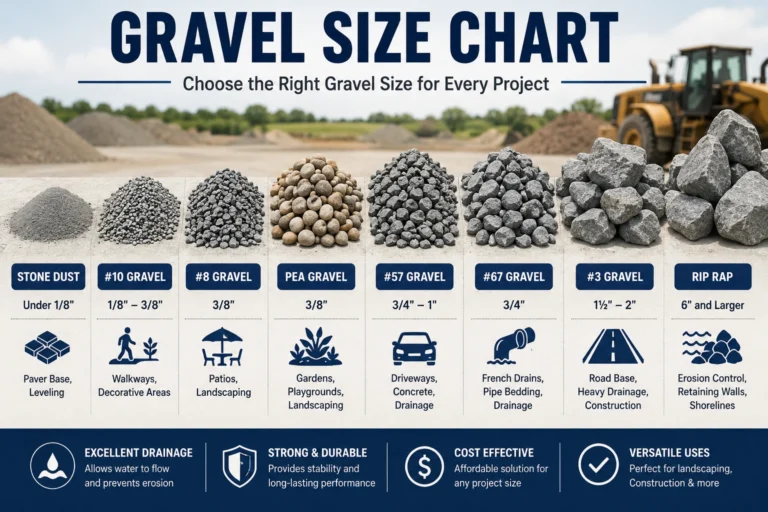
- Gravel Calculator for driveways, pathways, and drainage projects.
- Concrete Calculator for slabs, patios, and foundations.
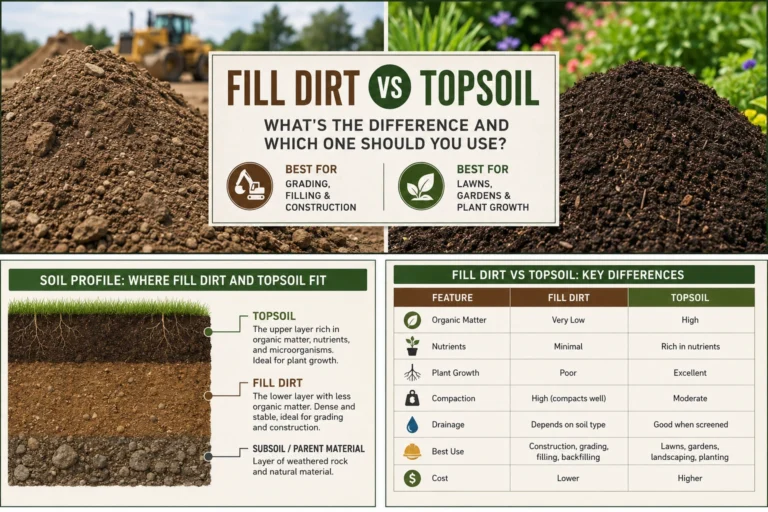
- Soil Calculator for gardens and raised beds.
- Mulch Calculator for landscaping projects.
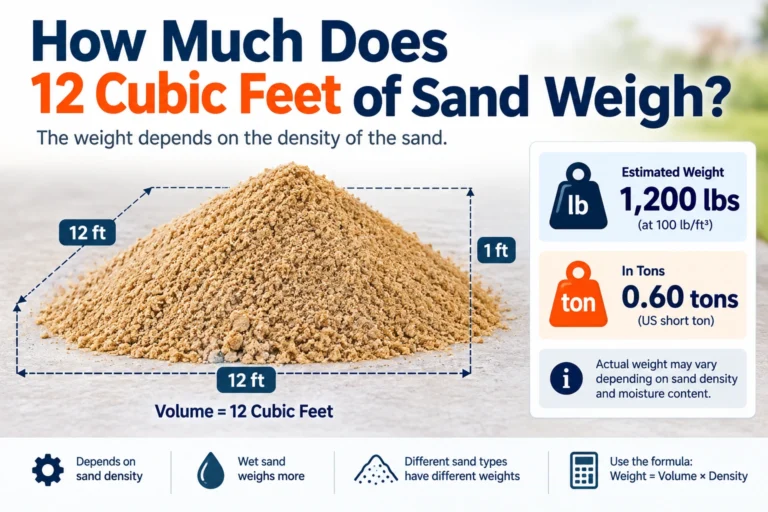
- Sand Calculator for pavers, playgrounds, and levelling work.
Using the correct calculator helps reduce waste and ensures you order the right amount of material.
Frequently Asked Questions
What measurements are needed to calculate cubic yards?
You need three measurements:
- Length
- Width
- Depth
Keep all measurements in the same unit before calculating the total volume.
Should I measure in feet or inches?
Length and width are usually measured in feet. If the depth is measured in inches, convert it to feet before calculating cubic yards.
How do I measure an irregularly shaped yard?
Break the area into smaller shapes such as rectangles, circles, or triangles. Measure each section separately and then combine the results.
How do I measure a circular flower bed?
Measure the diameter, calculate the radius, determine the area of the circle, and then multiply by the required depth before calculating cubic yards.
What if my driveway changes width?
Divide the driveway into separate sections. Measure each section individually and add the results together for a more accurate estimate.
Should I add extra material?
Yes. Many professionals recommend ordering 5–10% extra to allow for compaction, settling, and minor installation waste.
Can I measure a project by myself?
Yes. Most residential projects can be measured accurately with a tape measure, measuring wheel, stakes, and a notebook.
What’s the easiest way to calculate cubic yards after measuring?
After recording your measurements, use an online cubic yard calculator to automatically calculate the required volume instead of doing the math manually.
Why is accurate measuring important?
Accurate measurements help prevent over-ordering, reduce material waste, save money, and avoid delays caused by running short of material.
Which projects require cubic yard calculations?
Cubic yard calculations are commonly used for:
- Concrete slabs
- Gravel driveways
- Garden soil
- Raised beds
- Mulch
- Sand
- Landscaping projects
How We Researched This Guide
This guide is based on standard construction estimating practices, landscaping measurement techniques, and recommendations from trusted industry and educational sources. We reviewed guidance from the National Stone, Sand & Gravel Association (NSSGA), the Federal Highway Administration (FHWA), and university extension publications related to landscape planning and material estimation. While the measuring principles are consistent, local building practices and supplier recommendations may vary. Always verify project specifications with your local supplier or contractor before ordering large quantities of material.
Final Thoughts
Accurate measurements are the first step toward a successful landscaping or construction project. Whether you’re installing a concrete patio, building a gravel driveway, filling a raised garden bed, or spreading mulch, taking the time to measure correctly helps you avoid costly mistakes and unnecessary material waste.
By measuring your project carefully and using the appropriate calculator, you can estimate materials with greater confidence, stay within your budget, and complete your project more efficiently.
Once you’ve finished measuring, use our Cubic Yard Calculator to calculate the exact amount of material your project requires. If you’re working with a specific material, explore our dedicated Gravel Calculator, Concrete Calculator, Soil Calculator, Sand Calculator, or Mulch Calculator for even more accurate estimates.