Fill Dirt vs Topsoil: What’s the Difference and Which One Should You Use?
If you’re planning a landscaping, gardening, or construction project, you’ve probably come across the terms fill dirt and topsoil. While these materials may look similar at first glance, they serve very different purposes. Choosing the wrong one can lead to drainage problems, poor plant growth, unstable foundations, or unnecessary expenses.
Understanding the difference between fill dirt vs topsoil helps you buy the right material for your project and avoid costly mistakes. Whether you’re leveling a yard, filling a hole, building a raised garden bed, or preparing soil for a new lawn, knowing when to use each material is essential.
In this guide, we’ll explain what fill dirt and topsoil are, compare their properties, discuss their best uses, and help you decide which one is right for your project. We’ll also share practical tips to save money and improve long-term results.
Need to estimate how much material to order? Try our Cubic Yard Calculator to calculate the exact volume for your project.
What Is Fill Dirt?
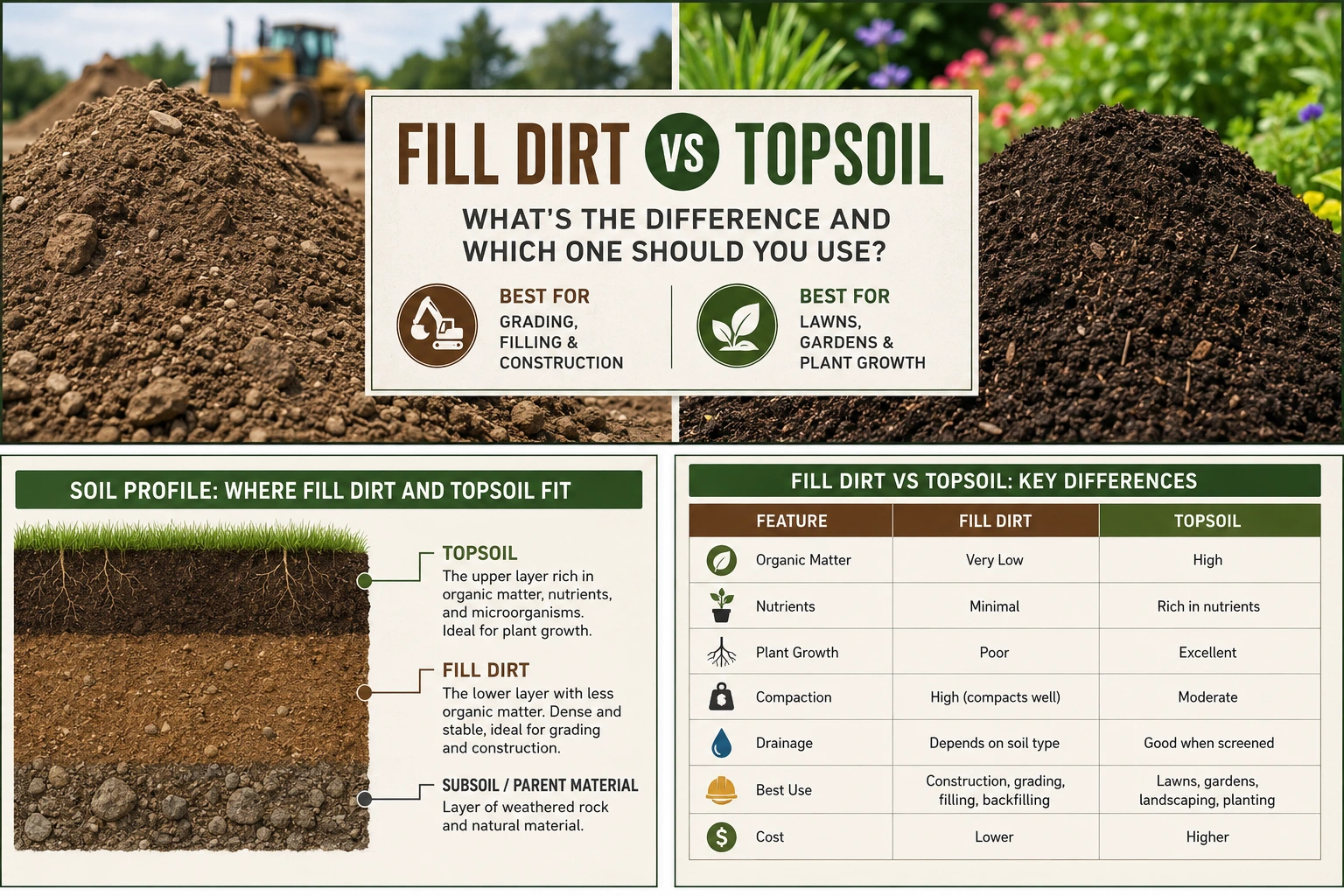
Fill dirt is the layer of soil found beneath the nutrient-rich topsoil. It usually contains very little organic matter and is made up of compact soil, clay, sand, or small rocks. Because it contains minimal organic material, it is less likely to shift or decompose over time.
This stability makes fill dirt an excellent choice for construction and grading projects where strength and long-term support are more important than plant growth.
Contractors commonly use fill dirt to level uneven ground, backfill foundations, raise low areas, and prepare sites before construction begins. Since it compacts well, it provides a stable base for buildings, driveways, patios, and retaining walls.
Unlike garden soil, fill dirt is not intended to support healthy plant growth. It lacks the nutrients and microorganisms that plants need to thrive.
What Is Topsoil?
Topsoil is the uppermost layer of soil found naturally on the ground. It contains organic matter, beneficial microorganisms, minerals, and nutrients that promote healthy plant growth.
High-quality topsoil is often screened to remove large rocks and debris, creating a loose texture that’s ideal for lawns, gardens, flower beds, and landscaping projects.
Because topsoil is rich in nutrients, it supports root development, retains moisture, and improves overall soil health. It’s commonly mixed with compost or other organic materials to create an even better growing environment.
If your goal is to grow grass, vegetables, flowers, or shrubs, topsoil is almost always the better choice.
Planning a garden project? Our Soil Calculator can help you estimate how many cubic yards of soil you’ll need.
Fill Dirt vs Topsoil: What’s the Main Difference?
Although both materials come from the ground, they are designed for completely different purposes.
The biggest difference lies in their composition. Fill dirt contains very little organic matter, making it dense and stable. Topsoil, on the other hand, is rich in organic material and nutrients, making it ideal for growing plants.
The following table highlights the key differences between the two.
| Feature | Fill Dirt | Topsoil |
| Organic Matter | Very Low | High |
| Nutrients | Minimal | Rich in nutrients |
| Plant Growth | Poor | Excellent |
| Compaction | High | Moderate |
| Drainage | Depends on soil type | Good when properly screened |
| Best Use | Construction & grading | Lawns, gardens & landscaping |
| Cost | Usually lower | Usually higher |
While fill dirt is chosen for strength and stability, topsoil is selected for fertility and healthy plant growth.
When Should You Use Fill Dirt?
Fill dirt is best suited for projects where structural support is more important than soil fertility.
For example, if you’re filling a large hole in your yard or leveling uneven ground before installing a patio, nutrient-rich soil isn’t necessary. In these situations, stable, compactable fill dirt is the better option.
Fill dirt is commonly used for:
- Filling low spots in a yard before landscaping
- Backfilling around foundations and retaining walls
- Raising the elevation of a property
- Creating a stable base for driveways and sidewalks
- Supporting construction projects
- Building embankments and grading land
Because it contains very little organic material, fill dirt is less likely to settle over time compared to nutrient-rich soils.
If your project involves grading or structural support, fill dirt is usually the most economical and practical choice.
When Should You Use Topsoil?
Topsoil should be used whenever healthy plant growth is the primary goal.
Whether you’re planting grass seed, installing sod, creating flower beds, or building raised garden beds, nutrient-rich topsoil provides the environment plants need to establish strong roots.
Topsoil is commonly used for:
- Growing lawns
- Vegetable gardens
- Flower beds
- Raised garden beds
- Planting trees and shrubs
- Landscape renovation
- Repairing damaged lawns
Unlike fill dirt, topsoil contains beneficial microorganisms and organic matter that improve water retention and nutrient availability.
For even better results, many homeowners mix topsoil with compost before planting.
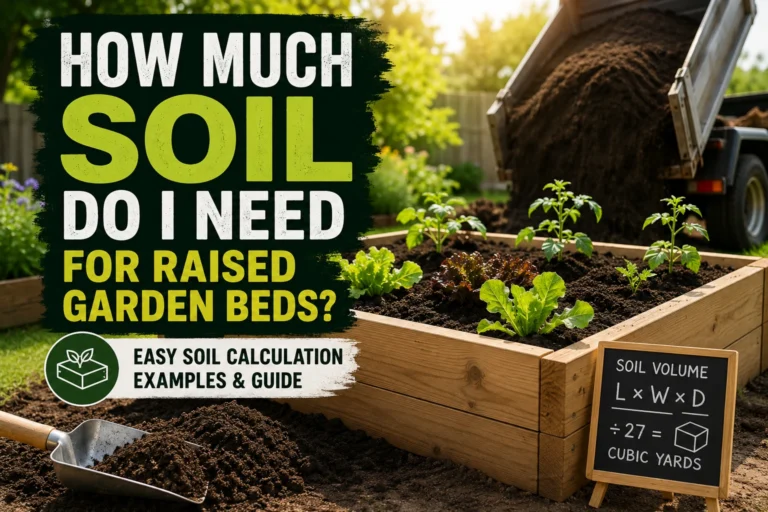
Need to know how much topsoil to buy? read our guide on How much soil do i need for raised garden beds? for practical examples.
Can You Grow Grass in Fill Dirt?
One of the most common questions homeowners ask is whether grass can grow directly in fill dirt.
The short answer is yes, but it’s not recommended.
Grass seed may germinate in fill dirt, but it often struggles because the soil lacks nutrients, organic matter, and beneficial microbes. In many cases, the grass develops shallow roots and requires more frequent watering and fertilization.
A much better approach is to use fill dirt to create the desired grade and then spread 4 to 6 inches of quality topsoil over the surface before planting grass.
This combination provides both a stable foundation and a nutrient-rich growing layer, giving your lawn a much better chance of long-term success.
Can You Put Topsoil Over Fill Dirt?
Yes, and in many cases, this is actually the best solution.
Construction projects often require large amounts of fill dirt to raise the ground level or fill deep holes. Once the area has been properly graded and compacted, a layer of topsoil is added to create a healthy growing surface.
This approach combines the strengths of both materials. The fill dirt provides a stable foundation that resists settling, while the topsoil supplies the nutrients and organic matter needed for healthy grass, flowers, and plants.
For most residential landscaping projects, professionals recommend applying 4 to 6 inches of quality topsoil over compacted fill dirt. If you’re planting deep-rooted shrubs or trees, a thicker layer of topsoil may be beneficial.
Using only topsoil to fill large holes is usually not recommended because the organic matter will gradually decompose, causing the ground to settle over time.
Which Material Is Better for Landscaping?
The answer depends on your project.
If you’re creating a healthy lawn, planting flowers, or building a vegetable garden, topsoil is the clear winner because it contains nutrients that support plant growth.
However, if your goal is to level a yard, improve drainage, or prepare the ground for a patio or driveway, fill dirt is the better choice because it provides greater stability.
Many landscaping projects actually require both materials.
For example, when building a new lawn, contractors often use fill dirt to establish the proper grade and then spread several inches of screened topsoil before seeding or laying sod.
This method produces a durable base while creating ideal growing conditions for grass.
Fill Dirt vs Topsoil for Different Projects
The table below can help you decide which material is best for your specific project.
| Project | Best Material |
| Filling large holes | Fill Dirt |
| Grading a yard | Fill Dirt |
| Building a retaining wall | Fill Dirt |
| Backfilling foundations | Fill Dirt |
| Installing a driveway | Fill Dirt |
| Growing grass | Topsoil |
| Vegetable gardens | Topsoil |
| Flower beds | Topsoil |
| Raised garden beds | Topsoil |
| Planting trees and shrubs | Topsoil |
If your project involves both construction and landscaping, using a combination of fill dirt and topsoil often provides the best long-term results.
Cost Comparison: Fill Dirt vs Topsoil
One reason many homeowners confuse these materials is that they look similar. However, their prices can vary significantly.
Fill dirt is usually less expensive because it requires little processing and contains very little organic material.
Topsoil costs more because it is often screened, processed, and enriched with nutrients that improve plant growth.
The following table shows general price ranges.
| Material | Average Price Per Cubic Yard* |
| Fill Dirt | $10–$30 |
| Topsoil | $20–$60 |
*Prices vary depending on your location, supplier, quality, and delivery charges.
Although topsoil has a higher upfront cost, it usually produces healthier lawns and gardens, making it a worthwhile investment for planting projects.
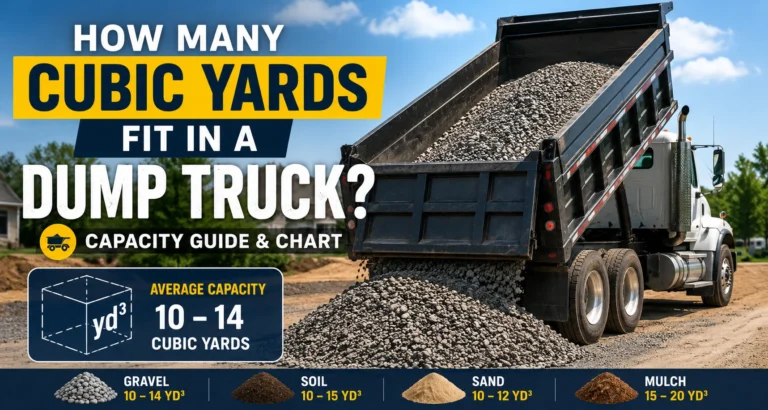
Want to estimate how much material you’ll need before requesting a quote? Use our
Cubic Yard Calculator to calculate the required volume in just a few seconds.
How Much Fill Dirt or Topsoil Do You Need?
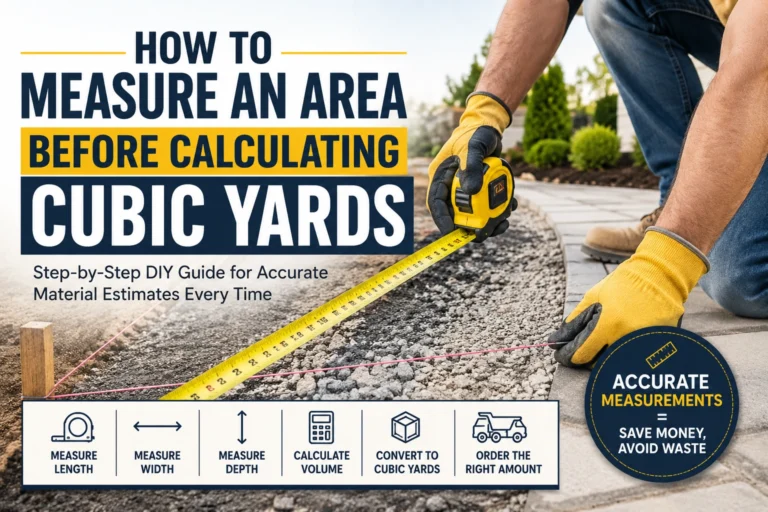
Before ordering any bulk material, it’s important to calculate the correct volume.
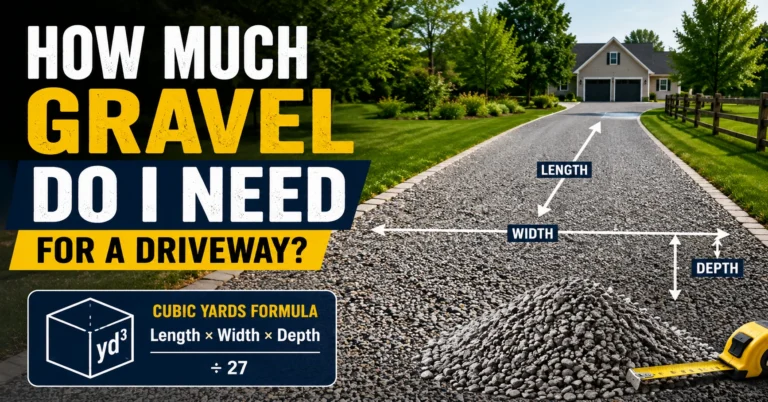
The standard formula is:
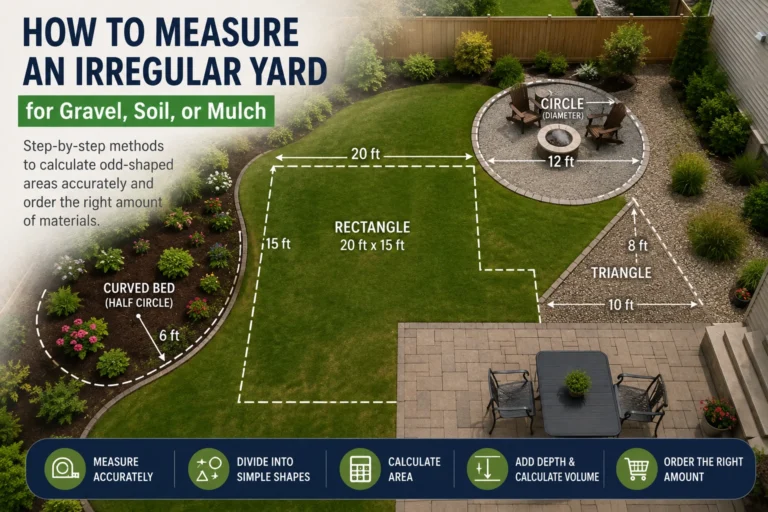
Cubic Yards = (Length × Width × Depth) ÷ 27
Where:
- Length = feet
- Width = feet
- Depth = feet
For example, suppose you want to cover an area that measures:
- Length: 30 feet
- Width: 20 feet
- Depth: 4 inches
First, convert the depth to feet.
4 inches ÷ 12 = 0.33 feet
Now calculate the volume.
30 × 20 × 0.33 = 198 cubic feet
198 ÷ 27 = 7.3 cubic yards
In this example, you would order approximately 7.5 to 8 cubic yards to allow for settling and minor measurement differences.
Common Mistakes When Buying Soil
Buying the wrong material is one of the most common mistakes homeowners make.
Some people purchase topsoil to fill deep holes because they assume it is “better soil.” Unfortunately, this usually increases project costs without improving the final result.
Others use fill dirt for lawns and gardens, only to discover that plants struggle because the soil lacks nutrients.
Another common mistake is ordering the exact calculated amount. Most professionals recommend ordering 5–10% extra to account for compaction and minor measurement errors.
Finally, don’t assume that all topsoil is the same. Some suppliers offer screened topsoil, while others sell blended topsoil that includes compost and organic matter. Ask your supplier exactly what is included before placing an order.
Expert Tips for Choosing the Right Material
If your project involves structural support, always choose fill dirt.
If your project involves growing plants, choose quality screened topsoil.
For new lawns, use compacted fill dirt as the base and finish with several inches of topsoil.
If you’re unsure which material is right for your project, discuss your plans with your supplier before ordering. They can often recommend the most suitable material based on your local soil conditions and intended use.
Frequently Asked Questions
Is fill dirt the same as topsoil?
No. Fill dirt contains very little organic matter and is mainly used for construction, grading, and backfilling. Topsoil is nutrient-rich and designed to support healthy plant growth.
Can I grow grass on fill dirt?
Grass can grow on fill dirt, but it usually won’t thrive because the soil lacks nutrients. For the best results, spread 4 to 6 inches of quality topsoil over the fill dirt before seeding or laying sod.
Which is cheaper, fill dirt or topsoil?
Fill dirt is generally less expensive because it requires minimal processing. Topsoil costs more due to its organic content and improved growing quality.
Can I use topsoil to fill a large hole?
You can, but it’s usually not recommended. Fill dirt provides better stability and is more cost-effective for deep filling projects. A layer of topsoil can then be added on top if plants or grass will be grown.
How much fill dirt or topsoil do I need?
Measure the length, width, and depth of the area, then calculate the volume in cubic yards using the formula:
Cubic Yards = (Length × Width × Depth) ÷ 27
Or simply use our Cubic Yard Calculator for an instant estimate.
Should I mix topsoil with compost?
Yes. Mixing quality compost with topsoil improves drainage, increases nutrient content, and promotes healthier root growth for gardens, lawns, and flower beds.
Does fill dirt settle over time?
Properly compacted fill dirt settles very little compared to topsoil. That’s why contractors prefer it for grading, foundations, and structural support.
Can I use fill dirt in raised garden beds?
No. Raised garden beds should be filled with topsoil or a high-quality garden soil mix because plants need nutrients and organic matter to grow successfully.
Final Thoughts
Although fill dirt and topsoil may appear similar, they are designed for completely different purposes. Fill dirt is valued for its strength, stability, and ability to support construction projects, while topsoil provides the nutrients and organic matter needed for healthy lawns, gardens, and landscaping.
Choosing the right material depends on your project’s goals. If you’re leveling land, filling low areas, or creating a stable base for a structure, fill dirt is usually the best option. If you’re planting grass, flowers, vegetables, or shrubs, topsoil is the clear choice.
For many landscaping projects, the ideal solution is to use fill dirt as the foundation and finish with a layer of quality topsoil. This combination offers long-term stability while creating the best possible environment for healthy plant growth.
Before placing your order, take accurate measurements and calculate the required volume. Our free calculators can help you estimate the right amount of material and avoid unnecessary costs.